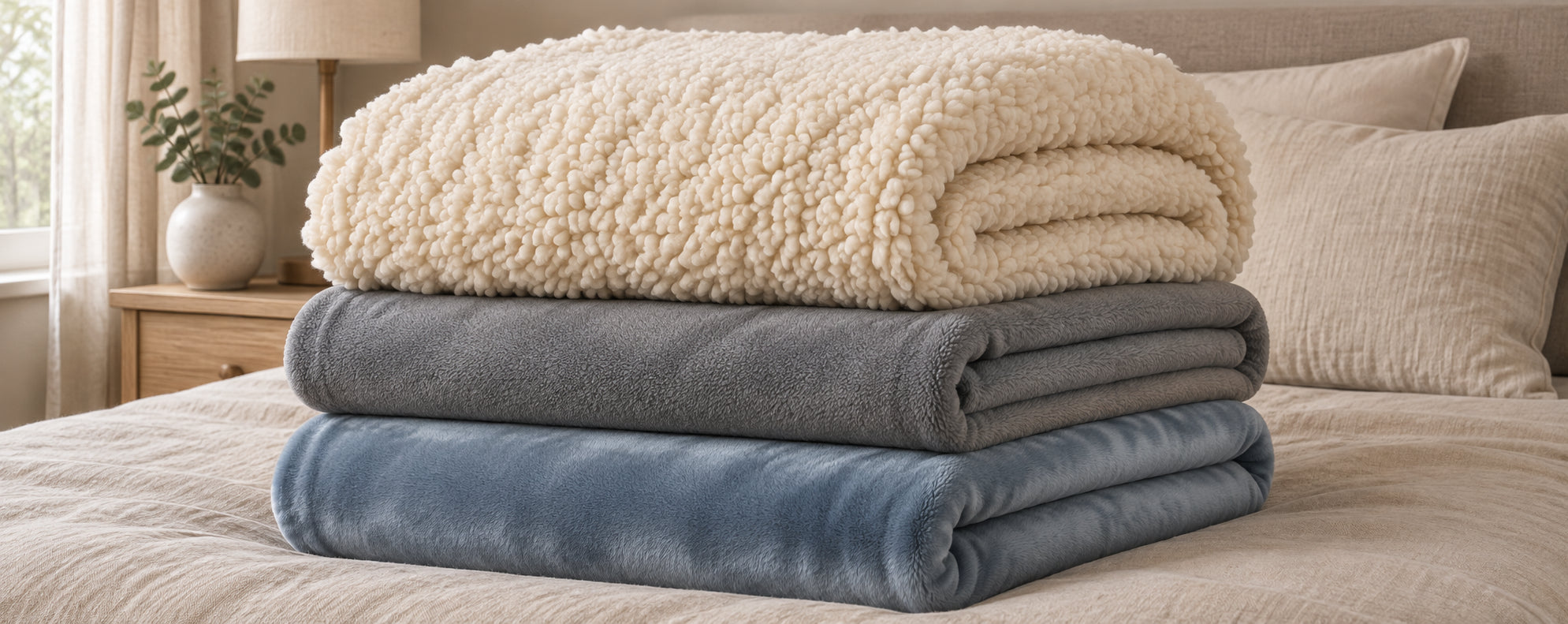
If you're deciding between a sherpa weighted blanket, a fleece one, and a minky one, the real question is usually "which one will keep me warm without making me sweat?" Here is the short version: sherpa is the warmest of the three, fleece is lighter and more forgiving, and minky sits in between with the softest, smoothest feel. The longer version depends on your room temperature, how you sleep, and what you want against your skin. A fleece weighted blanket and a minky one can look similar in photos but behave quite differently at 2 a.m., so this guide walks through each fabric and how YNM offers it. We'll also be upfront about one detail: at YNM, minky weighted blanket comfort comes from a duvet cover rather than a standalone blanket, and we'll explain what that means for you.
The Short Answer: Which Is Warmest?
There is no standardized lab test that ranks these three fabrics for every blanket on the market, because warmth also depends on pile thickness, fabric density, and the weight of the blanket itself. In day-to-day use, though, the pattern is consistent:
| Fabric | Feel | Warmth | Best for |
|---|---|---|---|
| Sherpa | Thick, fluffy, lofted pile | Warmest | Cold nights, people who sleep chilly |
| Minky | Short, silky, very smooth pile | Comfortable, not stuffy | Mild rooms, close-to-skin comfort |
| Fleece | Soft, light, flat | Moderate | Cool rooms, air-conditioned spaces |
Sherpa wins on warmth for a simple reason: its looped, lofted pile holds more air than a flat fabric, and trapped air is what insulates. Fleece and minky are both flatter, so they feel cozy without the heavy heat-retention of sherpa.
Sherpa: The Warmest Option
Sherpa is a fleece variant with a bulky, textured pile that resembles lamb's wool. In our team's experience, a sherpa weighted blanket is the one people reach for on autumn and winter nights: it feels warm right away, with none of that cold-sheet shock when you first get under it. It suits anyone who tends to sleep cold.
If you want to see one in practice, YNM's Sherpa Fleece Weighted Blanket is built for colder climates. The trade-off is straightforward: that same warmth can feel like too much in a heated bedroom or in summer.
Fleece: Light, Soft, and Easy to Live With
Fleece is the flatter, lighter cousin of sherpa. In our team's experience, a fleece weighted blanket feels soft and light, with moderate warmth that works well when the room is a little cool, such as an air-conditioned bedroom, rather than truly cold. It's less likely to leave you overheated, which makes it a good all-rounder if you aren't sure how warm you run.
Minky: Silky, Smooth, and Not Too Hot
Minky is a short-pile fabric with a velvety, almost silky surface. In our team's experience, a minky weighted blanket feels soft and smooth against the skin, a gentle, plush texture that is comfortable when the room isn't cold, and it generally doesn't feel stifling.
Here is the honest part. YNM doesn't sell a standalone minky blanket. Minky comes through our duvet covers, which slip over a weighted blanket and let you change its surface without changing the blanket underneath.
Which Fabric Fits Your Season and Room?
Fabric choice is partly a seasonal decision, and it doesn't have to be permanent. Many people keep one blanket and change the surface around it. This table is a starting point rather than a rule, since heating, humidity, and personal temperature all shift the picture:
| Season / room | Sherpa | Fleece | Minky |
|---|---|---|---|
| Deep winter, cold bedroom | Best fit | Fine with extra layers | Good with a warm base layer |
| Autumn / spring, mild room | Can run warm | Comfortable | Comfortable |
| Air-conditioned room | Usually too warm | Good fit | Good fit |
| Summer, warm room | Not recommended | Borderline | Borderline; consider a cooling fabric |
If you want just one blanket for the whole year, the middle options (fleece or a minky cover) are easier to live with than sherpa. If you mostly want something for the coldest months, sherpa is the one that will feel noticeably different from your regular bedding. And if summer is your main problem, skip all three and look at the cooling line instead.
How to Choose by How You Sleep
A few simple rules of thumb:
- If you sleep cold, or your room drops below comfortable, a sherpa weighted blanket is the safest bet.
- If you run in the middle, or your room is air-conditioned, a fleece weighted blanket gives you cozy without heavy.
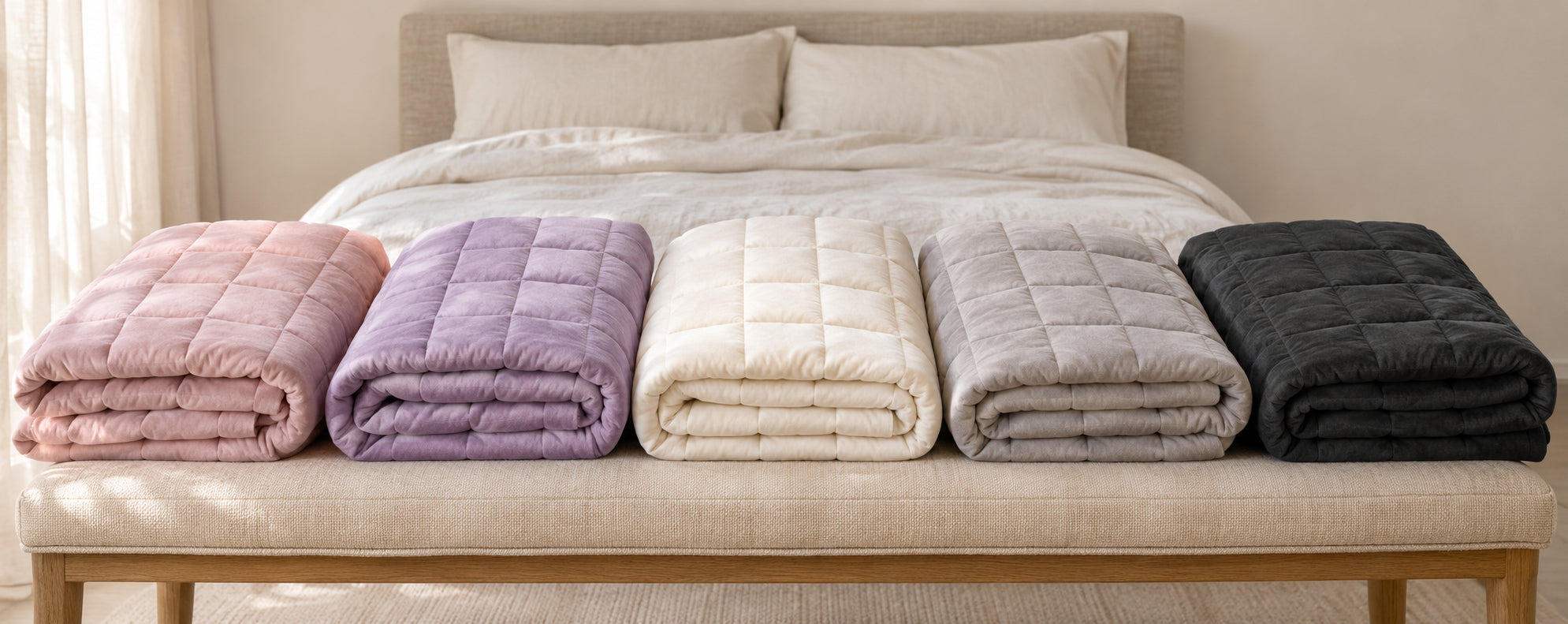
- If you care most about silky texture and flexible layering, a minky weighted blanket feel is possible through a duvet cover over your weighted blanket, which lets you swap the surface without changing the blanket underneath.
- If you share a bed with someone who runs hot, lean toward the lighter fabrics, or consider separate blankets for each person, or a cooling weighted blanket if overheating is the issue.
Which Fabric Feels Best Against Your Skin?
Texture is where preference gets personal. Sherpa is plush and a little bulky, and its looped pile can feel like too much against bare skin when the room is warm. Fleece is soft and light, though it can feel slightly dry and may build static in dry winter air. Minky is the smoothest of the three, and it's the one people most often describe as silky on bare arms and neck.
A simple way to decide is to think about where the blanket will sit. If it mostly rests on your lap or chest while you read or watch TV, feel matters more than warmth, and minky or fleece is usually the happier choice. If it covers your whole body overnight, warmth moves up the list and sherpa earns its place. A removable cover also lets you try a new surface without replacing the whole blanket.
What Size Should You Choose for Each Fabric?
Size follows your body, not your mattress: a weighted blanket is meant to cover you, not hang off the bed. YNM's sizing chart runs from Toddler (36" x 48") and Kids (41" x 60") up through Twin (48" x 72"), Full/Queen (60" x 80"), and King (80" x 87"). For one adult, Twin or Full/Queen is usually enough. Couples sharing a bed generally do better with Full/Queen or King, so neither person is left uncovered.
Fabric changes the picture a little. Sherpa has the thickest pile, so a large sherpa blanket can feel bulky and hot when spread over a whole bed, and a smaller size that covers just you often feels better. Fleece and minky are flatter, so going one size up costs you less in bulk and gives a more generous, tucked-in feel. If you plan to use a minky cover, match the cover to the size of the blanket underneath so it doesn't bunch.
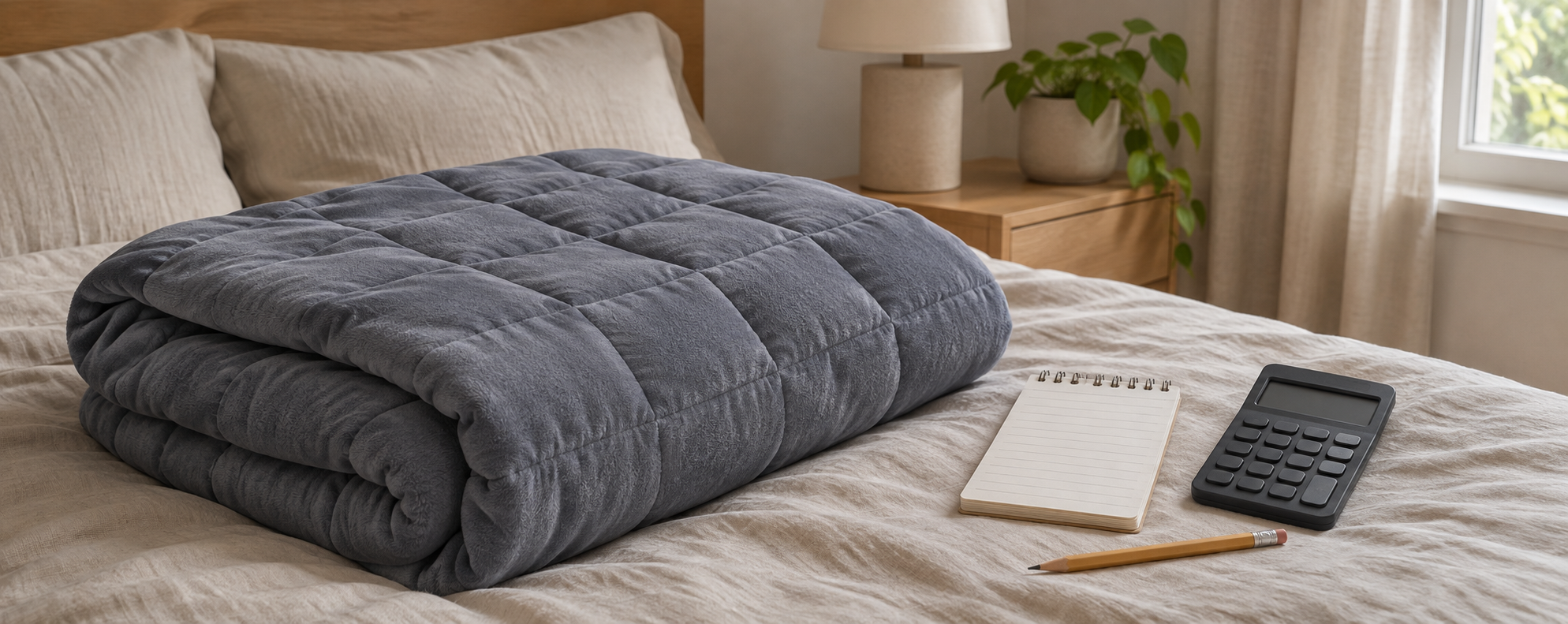
Weight still comes first, whatever the fabric: the usual guideline is about 10% of your body weight plus 1 lb, and for couples, go by the lighter sleeper. Pick the weight, then the size, then the fabric.
How Do Sherpa, Fleece, and Minky Hold Up in the Wash?
All three are synthetic, pile-based fabrics, and the pile is where they differ. Sherpa's thick, lofted surface is the most likely to flatten or mat if it's washed too hot or dried too aggressively, and a weighted version holds more water, so it's the heaviest to handle. Fleece tends to be the easiest of the three: its flat, shorter surface generally dries faster, though fleece can pill with friction over time. Minky's short, silky pile usually stays smooth, but heat can roughen it, so it's worth keeping the dryer on low.
Two habits help all three. Always follow the care label on your specific blanket or cover, because construction and fill vary. And wash covers more often than the blanket underneath: this is the practical advantage of the minky duvet cover route, since you can launder the cover on its own and spare the weighted blanket most of the washing. For the step-by-step process, including how to handle the extra weight when wet, see our washing and care guide (see Further Reading below).
FAQ
Is a sherpa weighted blanket too hot for summer?
For most people, yes, in a warm room. Sherpa's lofted pile holds heat, so it's best from autumn through spring. If you want weight in summer, a cooling fabric is a better fit.
Which is warmer, fleece or sherpa?
Sherpa. Fleece is flatter and lighter, so it gives moderate warmth, while sherpa's thicker pile insulates more.
Is a fleece weighted blanket good for hot sleepers?
It's a gentler choice than sherpa, but it isn't designed for heat regulation. Hot sleepers are usually better served by a fabric built for cooling.
Does YNM sell a minky weighted blanket?
Not as a standalone blanket. Minky is available through YNM's duvet covers, which you place over a weighted blanket.
Can I put a minky duvet cover over any YNM weighted blanket?
Check the cover's size against your blanket's size on the product page before ordering, as covers are sized to fit specific dimensions.
Which fabric is best for a weighted blanket in winter?
Sherpa is the warmest of the three and the one we'd point cold sleepers toward first.