Are weighted blankets worth it? It depends on what you're hoping to get from one, and on whether you buy the right weight and build for your body. They cost more than ordinary bedding, and the evidence behind them is real but limited, so it's fair to be skeptical before you spend. This guide breaks down what you're actually paying for, what the research does and doesn't show, and how to decide without overpaying.
How Much Does a Weighted Blanket Cost?
The typical weighted blanket cost for an adult falls somewhere between $40 and $300, with the middle of the market sitting around $80 to $150. One seller's 2026 pricing guide breaks it down roughly as budget ($40 to $80), mid-range ($80 to $150), and premium ($150 to $300 or more). Treat those as estimates rather than market data, since they come from a retailer, but they match what you'll see when you shop around.
| Tier | Typical range | What it usually means |
|---|---|---|
| Budget | About $40–$80 | Polyester cover, simpler construction, fewer size and weight options |
| Mid-range | About $80–$150 | Better fabrics, more even weight distribution, more choices |
| Premium | About $150–$300+ | Specialty fabrics or knits, extra stitching and testing, larger sizes |
It also moves with size and weight. A throw uses far less fabric and fill than a King, and a 25 lb blanket needs more material and labor than a 10 lb one. For reference, starting prices across YNM's weighted blanket collection run from roughly $40 to $150 depending on fabric and construction. Prices change, so check the product page for current numbers.
Why Are Weighted Blankets So Expensive?
People who ask why are weighted blankets so expensive are usually comparing them to a regular blanket, and the gap is real. A weighted blanket simply has more going on inside it than a flat blanket does.
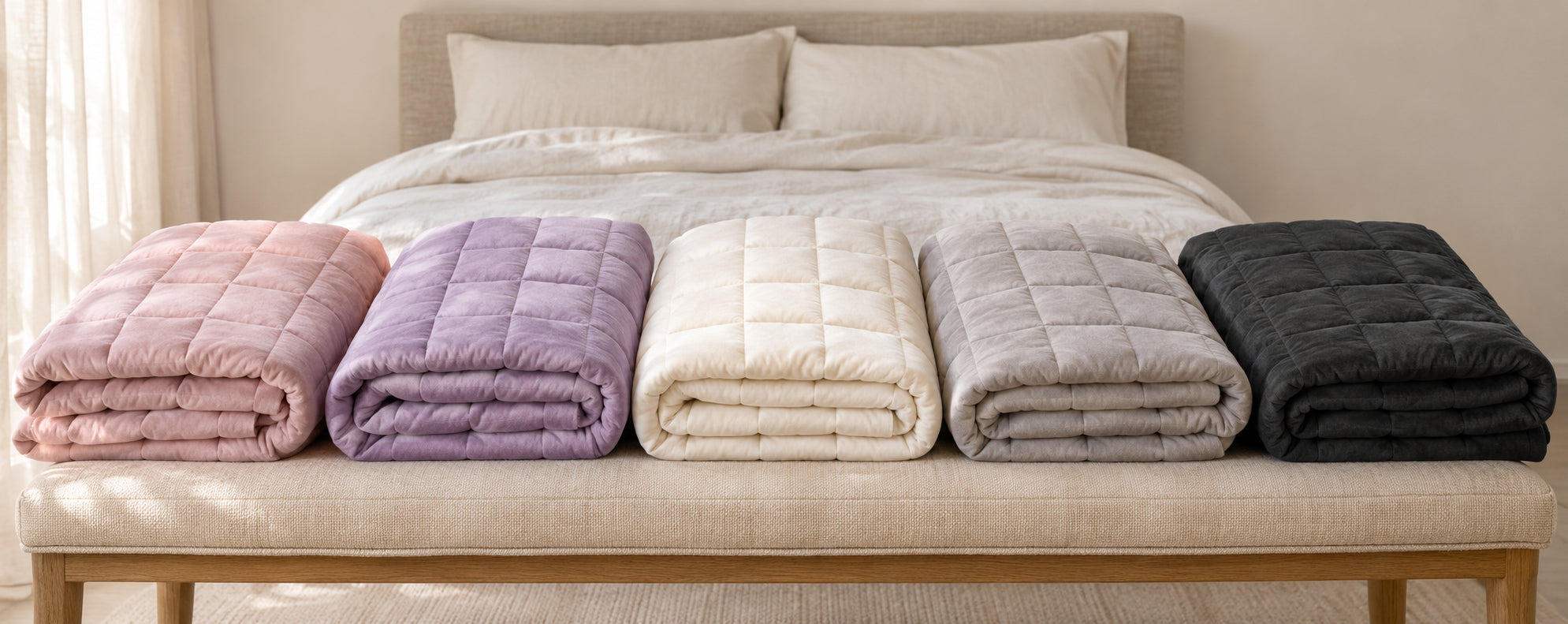
- The fill. Plastic pellets are the cheapest option. Steel beads sit in the middle, and glass beads are generally the premium choice: they're smaller, quieter, and spread more evenly.
- The fabric. Polyester microfiber keeps costs down, while cotton, bamboo, and linen blends cost more and tend to breathe better.
- The construction. To stop the weight from sliding into one corner, the blanket is quilted into small pockets, and tighter stitching takes more time and materials.
- The weight itself. More fill means more material, more labor, and heavier shipping.
- Quality checks. Safer, hypoallergenic materials and third-party testing add cost, though a high price doesn't automatically guarantee quality.
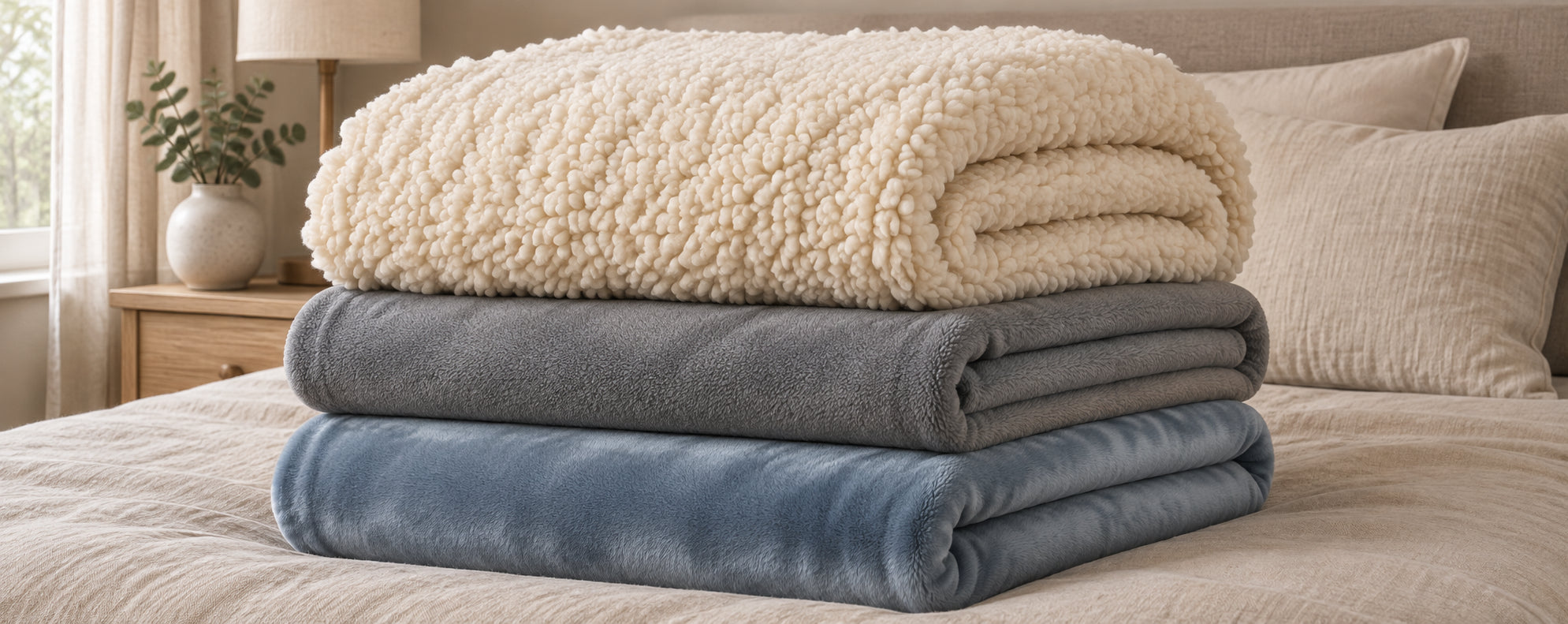
Knitted designs reach a similar place a different way: instead of beads, the weight comes from thick yarn, which uses a lot of material and slow, careful knitting.

What Does a Higher Weighted Blanket Price Actually Buy You?
A higher weighted blanket price isn't always better value. The things worth paying for are the ones you'll notice every night: weight that stays evenly spread, stitching that holds up through washing, and a fabric you actually like against your skin. A removable cover is another practical upgrade, because it lets you wash the cover without handling the heavy blanket underneath, and a duvet cover can also refresh the look later without replacing the whole blanket.
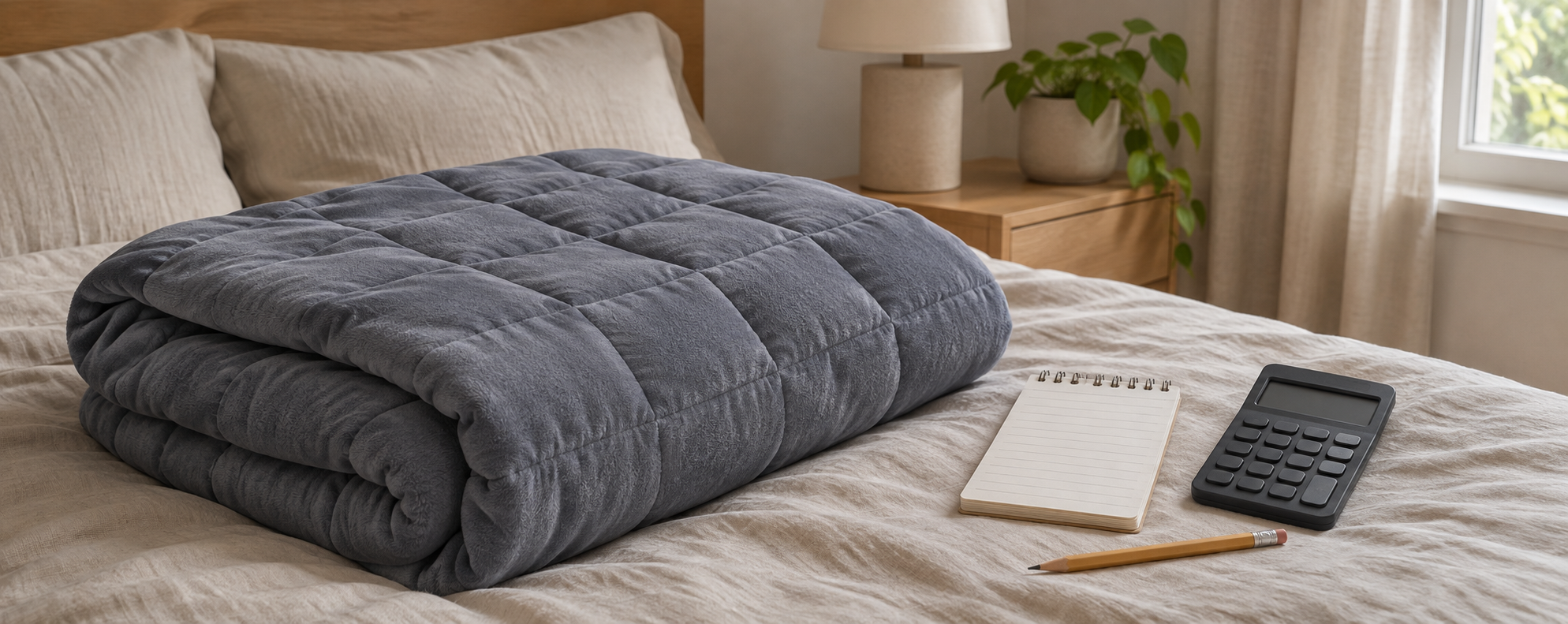
What's usually not worth paying extra for is marketing language. "Therapeutic" or "clinical-grade" on a label doesn't mean a blanket has been tested in a clinical trial. And a blanket that's heavier than your body needs isn't a better blanket. The common guideline is about 10% of your body weight plus 1 lb, and going far above that mostly makes it harder to move.
Are Weighted Blankets Worth It? What the Research Says
A 2024 systematic review and meta-analysis of randomized trials, published in Complementary Therapies in Medicine, pooled 8 studies with 426 patients who had mental health conditions. It found a small reduction in anxiety, no clearly significant pooled effect on insomnia (though a sensitivity analysis of two consistent studies pointed to lower insomnia scores), and no serious adverse events. The authors described weighted blankets as a possible safe add-on, and also warned that the evidence is limited: few studies, small samples, and about half rated at high risk of bias, partly because people can't be blinded to whether they're under a weighted blanket.
So, are weighted blankets worth it based on the evidence alone? Maybe, for some people, as a comfort tool and a low-risk add-on rather than a treatment. They aren't a replacement for medical care, and the studies were mostly in people with diagnosed conditions, not the general public.
Real-world experience matters too. One YNM customer told us she hesitated because weighted blankets are pricey, but this one calms her racing thoughts at bedtime, feels like a gentle hug, and helps her fall asleep faster. In her words, it was "worth every dollar." That's one person's experience, not proof, but it's a good example of the kind of everyday comfort people are buying.
When Is a Weighted Blanket Probably Worth It, and When Isn't It?
It's more likely to be worth the weighted blanket cost if you:
- Feel calmer under deep, even pressure and want something to help you wind down at night
- Sleep alone or share a bed with someone who also likes the weight
- Will use it most nights, not just occasionally
- Are willing to choose the weight carefully rather than guess
It's probably not worth it if you run very hot and never want extra layers, if you dislike being covered or feel restricted under weight, or if you need a blanket to be light enough to throw off quickly. If you have a medical condition, breathing problems, or mobility limits, talk with a doctor first. Hot sleepers aren't out of luck, though: cooling fabrics and open knits are designed to cut down on trapped heat.
How to Get the Best Value From a Weighted Blanket
A few habits protect your money, whatever the weighted blanket price on the tag:
- Pick the weight first. About 10% of your body weight plus 1 lb is a sensible starting point. For couples sharing one blanket, go by the lighter sleeper.
- Match the size to your body, not the mattress. Bigger isn't automatically better.
- Choose a fabric for your climate. Check the care label so washing doesn't ruin it.
- Check the warranty and return terms. YNM lists a 1-year warranty on its weighted blankets, and any retailer you buy from should be clear about returns.
- Start with a proven build. A classic bead-quilted design, like those in YNM's Original line, is a safe place to begin before you try specialty fabrics.
FAQ
Are weighted blankets worth it for sleep?
They can be for some people. Research on insomnia is mixed and limited, but many people find the steady pressure calming at bedtime. It's best to think of a weighted blanket as a comfort aid rather than a guaranteed fix.
Why are weighted blankets so expensive compared to regular blankets?
They use more material: fill, fabric, and detailed stitching to keep the weight even. Heavier blankets also cost more to make and ship.
How much should I spend on a weighted blanket?
Most people find good options between $80 and $150, so a weighted blanket cost in that range is a sensible target, though quality builds exist below and above that. Spend more on construction and a fabric you'll enjoy, not on marketing claims.
Is a cheap weighted blanket okay?
Sometimes. Budget options can work, but pay attention to weight distribution, stitching, and whether the cover can be removed or washed.
Is the weighted blanket price higher for bigger sizes?
Yes. Larger sizes and heavier weights need more fabric and fill, so they cost more.
Can a weighted blanket be returned if it doesn't work for me?
That depends on the retailer. Check return and warranty terms before buying, since policies vary.