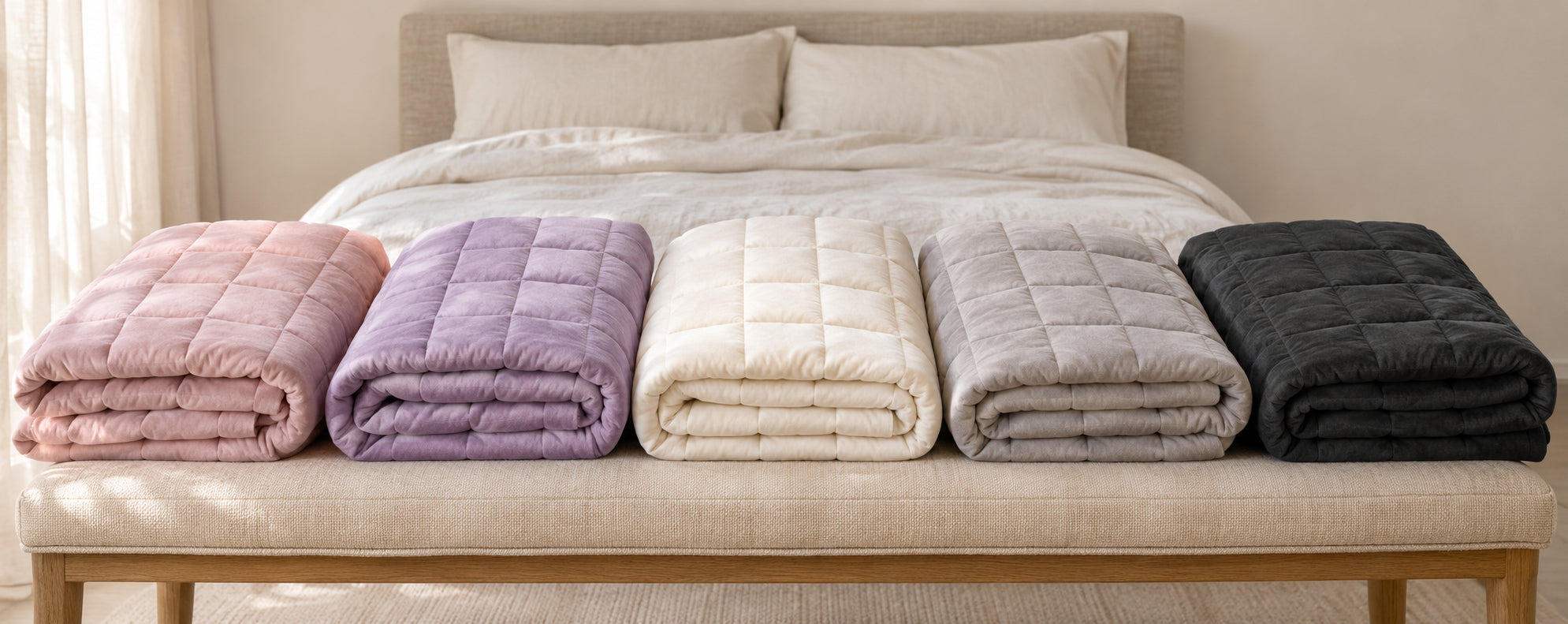
If you're torn between a pink weighted blanket and something more neutral, the question isn't really which color is best. It's which color you'll still like on your bed six months from now. The weight, fill, and fabric do the work of comforting you; the color decides whether the blanket looks right in your room and whether it stays looking good after months of use. This guide covers pink, purple, white, grey, and black, with practical tips from real customers on what worked and what didn't.
Does the Color of a Weighted Blanket Matter for Sleep?
Probably less than you'd expect. There's no solid research showing that the color of a blanket changes how well you sleep, so it's best to treat color as a style and practicality decision rather than a sleep hack.
You'll sometimes see claims that certain colors help you sleep, but most trace back to surveys, not experiments. One widely shared online survey of 1,064 American adults, reported by T3 and run by a sleep website, linked purple bedrooms with the best self-reported sleep. But only 25 respondents had purple rooms, the ratings were self-reported, nothing suggests peer review, and it was about wall color, not bedding. That makes it interesting rather than proof.
The more reliable approach is to pick a color you find calming and that fits your space.
Quick Guide: Which Color Fits Which Bedroom?
| Color | Looks like | Great for | Watch out for |
|---|---|---|---|
| Grey | Calm, neutral, goes with almost anything | Most bedrooms, shared beds, homes with pets | Very cool greys can feel flat in a plain room |
| White | Bright, clean, airy | Light, minimal, or coastal rooms | Shows stains and needs more careful care |
| Black | Bold, cozy, high contrast | Dark or modern rooms, pairing with light bedding | Can show light lint or pale pet hair |
| Pink | Soft, warm, a little playful | Kids' rooms, warm neutrals, cozy corners | Bright pinks can clash with some palettes |
| Purple | Calm and distinctive | Adding personality, pairing with grey or cream | Deep purples can look darker in person |
Which Color Weighted Blanket Is Best for Kids, Adults, and Gifts?
For kids, let the child have a say. A color or print they love makes them more likely to want to use the blanket, which matters more than any theory about calming shades. Soft solids and gentle prints are easy to live with, and a mid-tone hides everyday spills. If your child dislikes busy patterns or very bright colors, a muted solid may feel easier. YNM's kids range includes playful prints as well as solid shades such as pink, purple, and grey. As with any kids' blanket, check the weight guidance for your child's weight and age, and ask your pediatrician if you're unsure.
For adults, the safest approach is a color that blends with your existing bedding: greys, whites, and warm creams for a calm look, or a deeper tone for contrast.
For gifts, go neutral when in doubt. Light grey and cream suit almost any room, and a neutral is rarely wrong. If you aren't sure of the recipient's taste, check that the retailer allows exchanges.

Is a Grey Weighted Blanket the Safest Color Choice?
If you want one color that works almost everywhere, grey is it. A grey weighted blanket sits comfortably with white, wood, navy, and warm neutrals alike, and it's forgiving in everyday life. One YNM customer told us light grey was "the right call," because it hides small bits of lint and pet hair much better than white does.
Light greys feel airy and soft, while charcoal and dark greys feel cozier and more grounded. If you share a bed or have pets, a mid-tone grey is usually the least fussy option. YNM's Original line includes light grey, and the knitted line offers several greys across different textures.
Is a White Weighted Blanket Worth the Extra Care?
White makes a bedroom feel lighter and fresher, which is why it's a favorite for minimalist and coastal looks. A white weighted blanket also layers beautifully over cream or pale bedding for a soft, tonal effect.
The trade-off is upkeep. As one YNM customer put it, white looks clean and bright, but she hadn't thought about stains and now has to be extra careful with it. If you eat or drink in bed, have kids, or have pets who climb up with muddy paws, a white weighted blanket will show it. A removable cover helps, since you can wash the cover instead of the whole blanket, and our washing guide covers the details. Whites also come in different tones, from crisp white to warm cream, so compare them against your sheets.
Will a Black Weighted Blanket Hide Stains and Look Cozy?
A black weighted blanket is a statement. It adds contrast against light sheets and a cozy, cocooning feel in a dark or modern room. Dark colors are also generally better at hiding spills and everyday marks than white.
The catch is that a black weighted blanket shows light-colored lint and pale pet hair, so it may need more frequent brushing or lint-rolling. Dark dyes can also look different in different light, so it helps to check how a blanket looks in daylight rather than only under warm lamps. YNM's Exclusive line includes black among its cotton options, and availability varies by size and weight, so check the product page.
What Does a Pink Weighted Blanket Add to a Bedroom?
Pink ranges from barely-there blush to bright fuchsia, and the right shade changes everything. A soft rose or pale pink reads as warm and gentle, and it pairs well with cream, beige, and natural wood. A hot or neon pink makes more of a statement and can clash with some palettes.
A pink weighted blanket is also popular for kids' rooms, and many people simply find it cheerful. It's often described as soothing, but there's no good evidence that pink does anything special for sleep, so choose it because you like it. YNM offers pinks across several lines, including soft pastel tones in its cooling and knitted ranges, so look at the shade names on each product page.
Is a Purple Weighted Blanket Really Calming?
Purple covers a wide spread, from pale lilac and lavender to deep plum. A lavender or lilac purple weighted blanket feels calm and slightly dreamy, and it looks lovely against grey, white, or cream. Deeper purples feel richer and more dramatic, though they can read darker in person than in photos.
If you're drawn to a purple weighted blanket because you've heard it's the best color for sleep, remember that the claim comes from that small, unreviewed survey. Pick it for the way it looks and feels in your room. Lilac and lavender tones in YNM's knitted line are a good place to start if you want softness without too much saturation.
Does a Dark Weighted Blanket Run Hotter Than a Light One?
Possibly a little, but not by much. Some home experts say dark fabrics absorb and hold slightly more heat than light ones, although those claims aren't backed by cited research, and the same experts say fiber matters more than color. For a weighted blanket, the fabric, fill, and weight have a far bigger effect on how warm it feels. If you run hot, choose breathable cotton, bamboo, or a cooling fabric first, then pick the color you like.
Which Color Hides Dirt, Lint, and Pet Hair Best?
No color hides everything. Light colors show stains and dirt more clearly, while dark colors hide stains and fading better but show pale lint and light pet hair. Mid-tones, like a medium grey or beige, are the most forgiving overall. If your pet has dark hair, lean lighter; if it has light hair, lean darker. Check the care label before washing, since bleach can damage dark fabrics.
Should a Weighted Blanket Match Your Bedding or Contrast With It?
Either works, and each creates a different mood. Staying in the same color family, such as grey on grey or cream on white, feels quiet and calm. Contrast, such as black or deep purple on pale bedding, makes the blanket a focal point. A simple rule is to choose one accent color per bed and keep the rest neutral, so the blanket doesn't compete with your pillows and throws.
How Do You Choose a Color Without Regretting It?
The most common color mistake isn't picking the wrong color family. It's picking a shade that looks different from what you expected. A shade that looks soft on screen can turn out much darker in person and clash with your bedding.
Fabric changes how a color looks, too. The same grey can read crisp and flat in smooth cotton, rich and deep in velvet, and softer and more textured in a chunky knit, because texture catches light differently. So if you're choosing between two fabrics in one color, picture the texture in your room, not just the shade.
A few habits help:
- Compare against your actual bedding. Hold a swatch or product photo next to your sheets and walls in the same light.
- Expect screens to vary. Phone and monitor settings change how colors appear, especially darks and pastels.
- Think about your daily life. Pets, kids, and eating in bed all point toward mid-tones and darker colors over white.
- Choose by shade name, not just the family. "Pink" or "grey" can mean very different things across products.
- Check the return and exchange terms in case the color isn't what you hoped.
FAQ
Does the color of a weighted blanket affect how well you sleep?
There's no strong evidence that it does. Weight, fabric, and temperature matter far more, so choose a color that suits your room and that you find relaxing.
What is the most popular weighted blanket color?
Neutrals such as grey and white are the usual favorites because they match most bedding. Grey tends to be the more practical of the two.
Is a white weighted blanket hard to keep clean?
It shows stains more easily than darker colors, so it needs more care. A removable cover makes cleaning easier.
How do I avoid buying the wrong shade?
Compare it against your bedding in daylight, read the exact shade name, and remember that screen colors can differ from the real fabric.