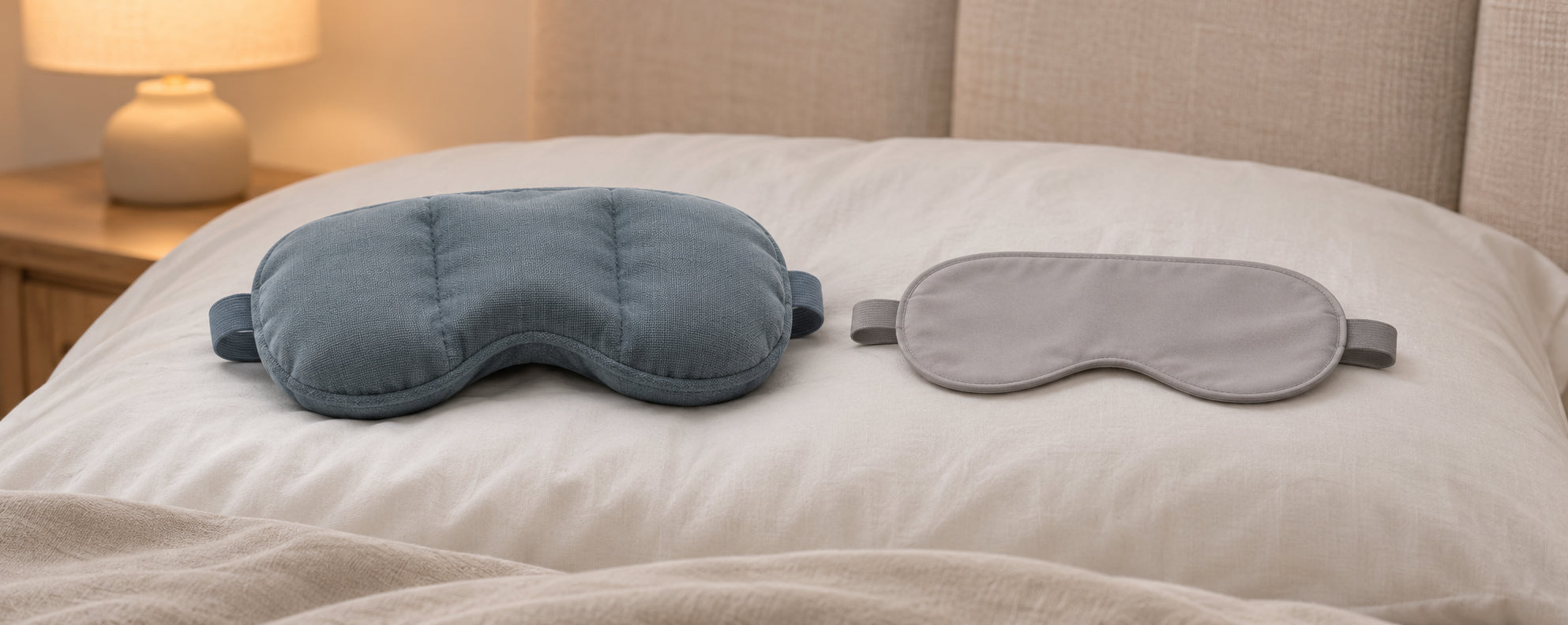
Plenty of people own a regular sleep mask and wonder if a heavier one is worth the switch. So what does a weighted eye mask do that a regular sleep mask doesn't? Mostly, it changes how the mask feels and how well it stays in place. This guide compares the two honestly: where weighted masks help, where a lighter mask is the better pick, and who should be careful.
Weighted Eye Mask vs Sleep Mask: What Is the Real Difference?
In short, a weighted eye mask is a sleep mask with a small, evenly spread bead fill that adds gentle pressure around the eyes, an idea borrowed from weighted blankets. If you want the full basics, our weighted eye mask 101 guide covers them. Here we'll stick to how it compares. The difference isn't in the darkness, since both can block light well if they fit properly. It's in weight, fit, and feel.
| Weighted eye mask | Regular sleep mask | |
|---|---|---|
| Light blocking | Good when it sits flush | Good when it sits flush |
| Pressure | Gentle, even pressure | Little to none |
| Staying in place | Usually stays put | Can slide or need adjusting |
| Feel | Grounding, a bit heavier | Light, barely noticeable |
| Side sleeping | Can feel heavy on the eyes | Usually more comfortable |
| Best for | Naps, travel, winding down | Quick rests, side sleepers |
A weighted eye mask vs sleep mask comparison really comes down to what bothers you more: a mask that slips, or a mask you can feel. Neither is better in every situation.
How Do the Two Masks Compare in Real Life?
The clearest weighted eye mask benefits show up when a mask has to stay in place. Here is how YNM customers described it, situation by situation:
- Naps: One customer switched from a regular mask to a weighted one because the gentle pressure keeps it from shifting, which makes it great for midday naps.
- Flights: Another said they kept readjusting a regular mask on flights, while the weighted version stays put and blocks light more reliably.
- Bedtime: A third said a normal mask is fine for a quick rest, but the weighted one helps them settle down faster at night.
The pattern is simple. Where a mask tends to slip, like naps and travel, the weight helps. Where you just need a quick rest, a regular mask does the job. The bedtime effect is one person's experience, not proof, though it fits what many people say about steady pressure feeling grounding.

When Is a Regular Sleep Mask the Better Choice?
The biggest one is comfort. Another YNM customer told us regular lightweight masks work better for them, because a weighted mask feels heavy on their eyes when they sleep on their side. That's common: side and stomach sleepers can feel the mask press in, and a weighted mask can shift if you move around a lot.
There's also a safety note. Eye doctors quoted in consumer reviews have warned that pressure on the eyes could be a problem for people with glaucoma, those who have had or are planning eye surgery, and anyone prone to dry eyes, and they advise against prolonged overnight use. The evidence on how weighted masks affect the eyes is thin, so if you have any eye condition, ask your eye doctor before using one.
Does Research Support Eye Masks for Sleep?
For eye masks in general, there is some support. A 2021 systematic review and meta-analysis in Frontiers in Psychiatry pooled 35 studies of eye masks and earplugs in critically ill patients and found improvements in several sleep measures. The authors also warned of limits: the studies were small, results varied widely, and some of the objective findings came from simulated ICU settings with healthy volunteers, so they don't directly apply to everyday sleep at home.
For weighted eye masks specifically, good research is lacking. Reviewers have noted there is no solid scientific evidence that they improve sleep better than regular masks. So treat the weight as a comfort feature to try, not a proven upgrade.
Which Should You Choose: A Weighted Eye Mask or a Regular Sleep Mask?
Use your own habits as the guide:
- Midday naps or light-sensitive sleep: a weighted mask is worth trying, since it tends to stay put.
- Flights and travel: weighted masks hold their position better when you shift in a seat.
- Side sleepers: start with a thin regular mask, or a very light weighted one.
- Winding down at night: a weighted mask may help you settle if you like the pressure.
- Quick rests: a regular mask is usually enough.
If you're undecided, a weighted eye mask vs sleep mask test is cheap: try the weighted one for a nap, and keep a regular one for side-sleeping nights.
What Should You Look for in a Weighted Eye Mask?
If you decide to try one, a few details matter more than the label:
- Weight. A lighter fill is easier on the eyes and a better starting point, especially for side sleepers. Heavier isn't automatically better.
- Even fill. The beads should be sewn into small compartments so the weight spreads evenly instead of bunching in one spot.
- Fit. A contoured shape that sits flush around the nose and cheeks blocks light better than a flat one, and it means you don't need to press harder to keep it in place.
- Fabric. Breathable, moisture-wicking fabrics feel cooler against your face, and some masks are designed so you can warm or chill them.
- Strap and comfort. A soft, adjustable strap keeps it secure without squeezing your head.
- Care and warranty. Check how the mask should be washed and what warranty the seller offers.
None of these guarantee a better night's sleep, but they make it more likely you'll actually enjoy wearing it.
Can You Use a Weighted Eye Mask Warm or Cool?
Some weighted eye masks can be used warm or chilled, which is a different benefit from the weight itself. A warm mask can feel soothing at the end of a long day, and a cool one can feel refreshing on tired or puffy-feeling eyes. Both are comfort uses, and there isn't solid research showing they improve sleep.
YNM's dual-sided weighted eye mask pairs bamboo fabric on one side with minky on the other and is listed for both hot and cold use. Always follow the care instructions that come with the mask for how to warm or chill it, and keep the temperature comfortable rather than hot or icy. Skip heat or cold if your eyes are irritated, and check with your eye doctor first if you have an eye condition.
How Can You Try a Weighted Eye Mask Safely?
Start with short sessions, such as a nap or a few minutes before bed, rather than wearing it all night. Make sure it rests gently and doesn't press on the eyeballs, and stop if you feel pain, pressure, or dryness. If you have glaucoma, dry eye, or recent eye surgery, speak with your eye doctor first. Weighted blankets use the same deep-pressure idea on the body, and you can see how they compare in YNM's weighted blanket collection.
FAQ
Do weighted eye masks help you fall asleep faster?
Some people say the gentle pressure helps them settle, but there's no solid research showing weighted masks work better than regular ones. Treat it as a comfort feature and see how you feel.
Is a weighted eye mask better than a regular sleep mask?
Not always. It can stay put better and feel more grounding, but a lighter mask is often more comfortable for side sleepers.
Can I sleep all night with a weighted eye mask?
Some people do, but eye doctors caution against prolonged overnight pressure on the eyes. Start with short sessions and stop if anything feels uncomfortable.
Who should avoid a weighted eye mask?
People with glaucoma, dry eye, or recent or planned eye surgery should talk with their eye doctor first.
Does a weighted eye mask block more light than a regular one?
Not by itself. How well either blocks light depends on how well it fits your face.