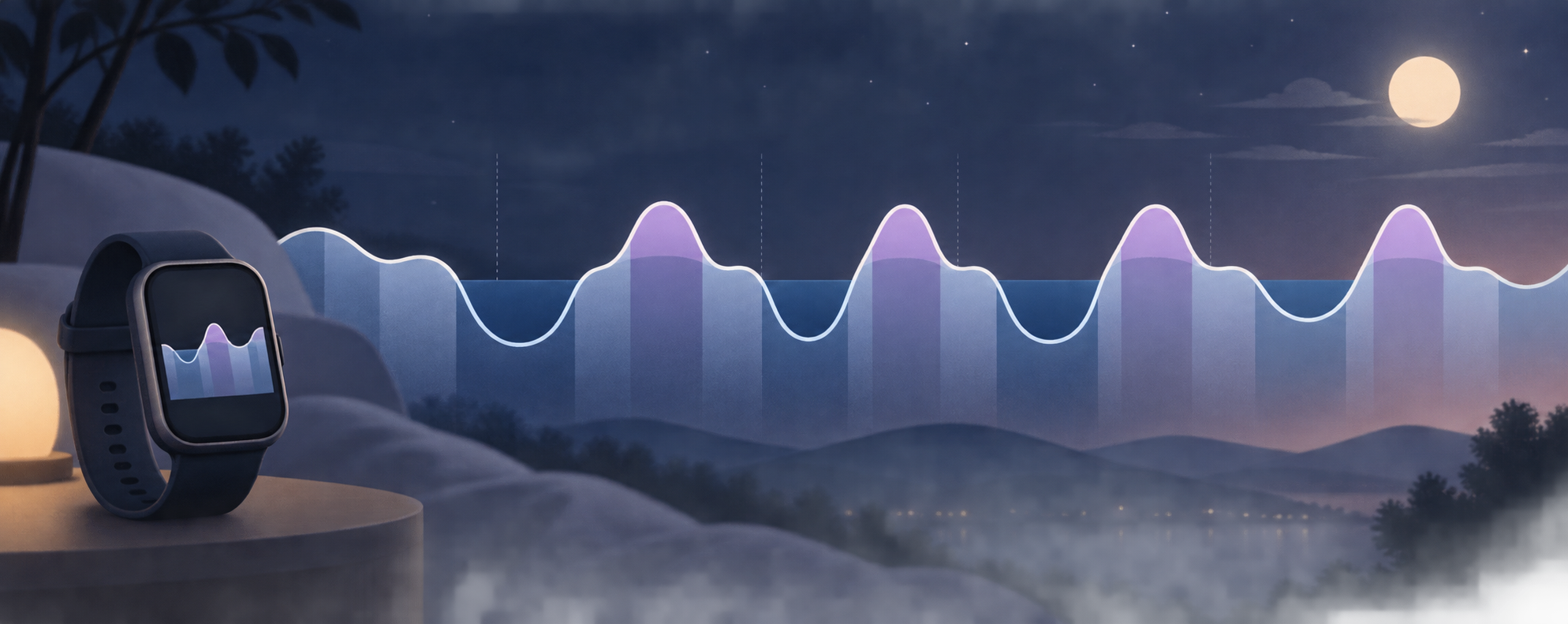
If your smartwatch just told you how much "core sleep" you got last night and you're not sure what that number actually means, you're not alone — and here's the honest answer before we get into the details: there's no single, agreed-upon definition of core sleep. Apple Watch uses it to mean light sleep (the N1 and N2 stages). Some older sleep research and other trackers have used the same term to mean something closer to deep sleep plus REM combined. Deep sleep, by contrast, is a well-defined, universally recognized stage — it's the N3 stage in modern sleep science, and there's no ambiguity about what it means clinically.
What Is Core Sleep, Really?
If you've searched what is core sleep and landed here, the short answer is: it's not a term that comes from the American Academy of Sleep Medicine (AASM), the body that sets the official standards for how sleep stages are classified and measured. It's a term that came from consumer wearables — most notably Apple Watch, which introduced it as a sleep-tracking category. On Apple Watch specifically, core sleep refers to the N1 and N2 stages combined: essentially a rebrand of what sleep scientists have called "light sleep" for decades. This stage typically makes up 45–55% of a healthy adult's night, which is why it shows up as such a large chunk on your sleep chart.
Here's where it gets genuinely confusing, though: some older sleep research, along with a handful of other trackers, has used "core sleep" to mean something different — the minimum sleep needed for basic functioning, sometimes defined as deep sleep (N3) plus REM combined. That's closer to the opposite of what Apple Watch means by the term. Fitbit, Oura, Garmin, and Samsung generally sidestep the term altogether, sticking with "light," "deep," and "REM" instead — likely because "core sleep" doesn't have a settled meaning to build a consistent metric around. If a number on your wrist says "core sleep," the honest move is to check which definition your specific device is using rather than assuming it means the same thing everywhere.
What Is Deep Sleep, Actually?
Deep sleep has a real, standardized definition, and it hasn't changed since the AASM updated its sleep-staging rules in 2007: it's stage N3, characterized by slow, high-amplitude delta brain waves. Before 2007, older research (and some outdated online explanations still floating around) split this into separate "stage 3" and "stage 4," but that distinction was retired and combined into the single N3 stage nearly two decades ago. If you see a source describing four distinct NREM stages with a separate "N4," that source is using outdated terminology.
During N3, your body is doing its most physically restorative work: tissue repair, immune system support, and growth hormone release. It tends to be concentrated in the first half of the night, with each 90-minute sleep cycle containing progressively less of it as the night goes on.
Core Sleep vs. Deep Sleep: The Actual Difference
Because "core sleep" doesn't have one fixed meaning, the honest core sleep vs deep sleep comparison depends on which definition you're working with:
- If your device means "core sleep = light sleep" (the Apple Watch definition): core sleep and deep sleep are essentially opposite ends of the same spectrum — one is the lightest, most easily interrupted stage (N1/N2), and the other is the deepest, hardest-to-wake-from stage (N3).
- If a source means "core sleep = deep sleep + REM": then deep sleep is simply one half of what's being counted as core sleep, with REM making up the other half.
Given how inconsistent the term is, deep sleep is really the more useful number to actually pay attention to on your own tracker, since it means the same thing no matter which device you're using.
REM Sleep vs. Deep Sleep

Unlike the core sleep question, rem sleep vs deep sleep is genuinely well-defined on both sides. Deep sleep (N3) is about physical restoration — slow brain waves, muscle repair, immune function, and it's concentrated earlier in the night. REM sleep is almost the opposite in character: your brain activity looks closer to being awake, your eyes move rapidly, most of your voluntary muscles are essentially paralyzed, and it's the stage most associated with vivid dreaming, memory consolidation, and emotional processing. REM sleep gets longer as the night goes on, making up more of your sleep in the early morning hours than at midnight.
Neither stage is "more important" than the other — they support different functions, and a healthy night includes both in reasonable proportion. Losing sleep tends to cut into deep sleep and REM disproportionately compared to lighter stages, which is part of why a short, fragmented night leaves you feeling both physically and mentally depleted.
Why Sleep Stage Data Is Worth Paying Attention To
One YNM customer put this well: her watch tracks core and deep sleep every night, and seeing the actual data helped her realize that late-night screen time was cutting into her deep sleep dramatically — a pattern she wouldn't have noticed just going by how tired she felt in the morning. That's really the practical value of sleep tracking, regardless of which definition of "core sleep" your device happens to use: it turns a vague feeling ("I slept badly") into a pattern you can actually act on.
Consistent sleep hygiene, a dark and cool room, and less screen exposure before bed all support more time in deep sleep specifically.
Can a Weighted Blanket Actually Help You Get More Deep Sleep?
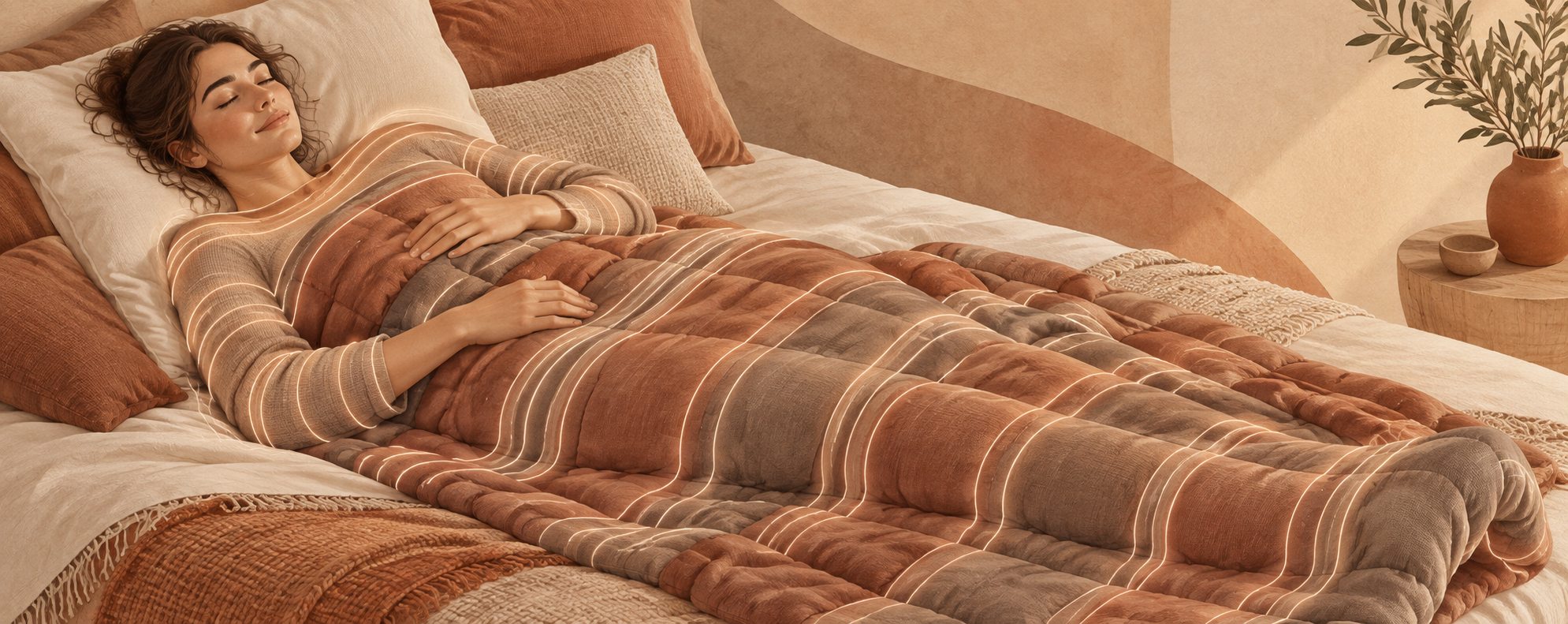
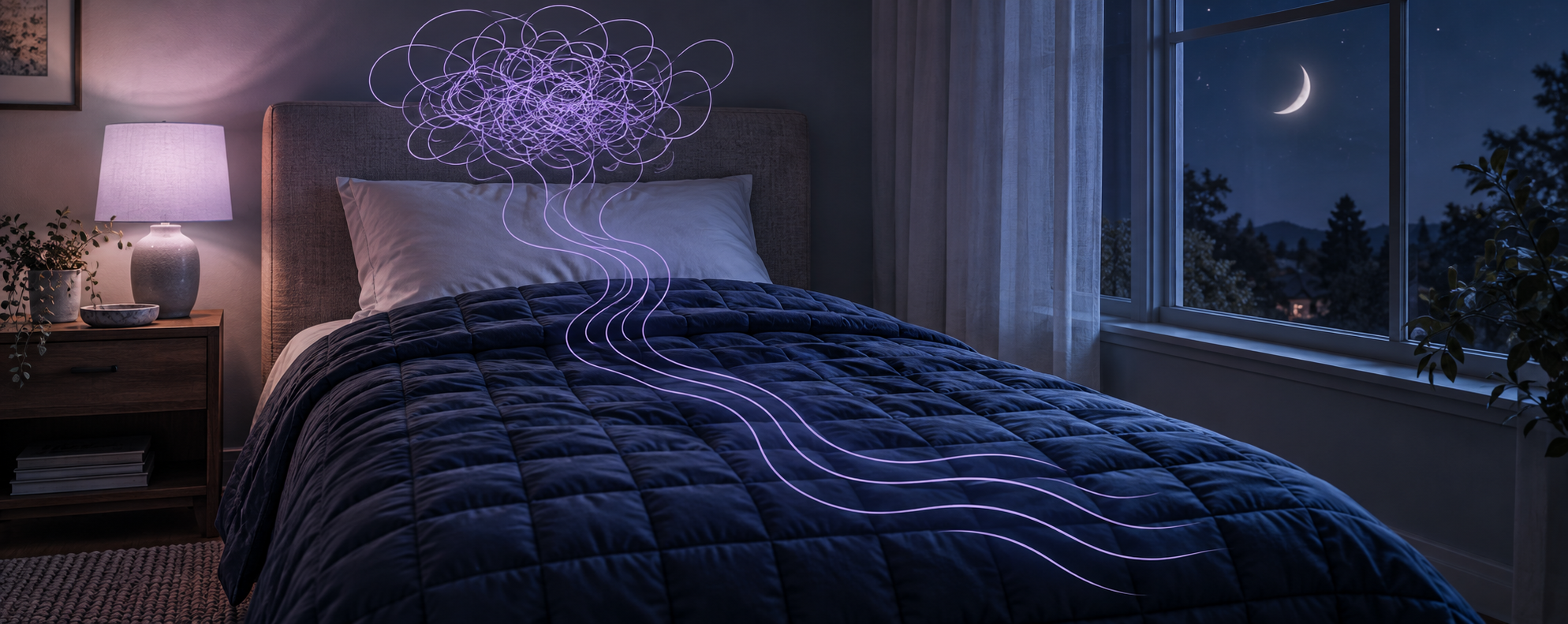
Here's where it's worth being precise rather than making a bigger claim than the evidence supports. A weighted blanket works through deep pressure stimulation — firm, even pressure that's associated with shifting the nervous system toward a calmer, more parasympathetic state. We cover that mechanism in full in our deep pressure stimulation guide.
On the research side, a 2024 pilot randomized controlled trial across three hospitals followed adults with clinical insomnia for a month and used actigraphy — an objective, wrist-worn movement sensor — alongside self-reported sleep quality scores. The weighted blanket group showed fewer nighttime awakenings and better overall sleep quality than the control group. That's a genuinely useful, objective result, but it's worth being clear about what actigraphy can and can't tell you: it measures movement and estimates sleep versus wake, which is a good proxy for sleep continuity and how restless a night was, but it isn't the same as an EEG-based sleep study that can actually distinguish N3 (deep sleep) from lighter NREM stages. So the honest summary is this: weighted blankets have real support for helping you fall asleep faster, stay asleep with fewer awakenings, and feel like your sleep quality has improved — not a proven, direct increase in deep sleep stage percentage specifically. If your tracker shows more deep sleep after starting to use one, that's plausible given fewer awakenings mean fewer interruptions to a deep sleep cycle, but it's an indirect effect, not something the research has measured stage-by-stage.
If you want to try it, the starting point is the same as with any weighted blanket: roughly 10% of your body weight plus about a pound, which our full weight guide breaks down in detail. YNM's Weighted Blanket Line covers that full range with a classic bead-filled construction, the Cooling Line is worth a look if a warmer blanket tends to wake you up overnight, and the Knitted Line is a bead-free alternative if you'd rather avoid loose fill entirely. Whichever you choose, pairing it with the sleep hygiene basics above — not with the blanket instead of them — is what actually moves the needle on both core and deep sleep.
FAQ
What is core sleep in simple terms?It depends on your device. On Apple Watch, core sleep means light sleep (N1 and N2 combined). Some older research and a few other sources define it as deep sleep plus REM instead. There's no single universal definition.
Is core sleep the same as deep sleep?Usually not — on most wearables that use the term, core sleep refers to light sleep, which is a different and lighter stage than deep sleep (N3).
What's the difference between REM sleep and deep sleep?Deep sleep (N3) is about physical restoration and happens more in the first half of the night. REM sleep is about dreaming, memory, and emotional processing, and it makes up more of your sleep in the early morning hours.
Is there really an "N4" deep sleep stage?No — that's outdated terminology. Since the AASM's 2007 update, deep sleep is a single stage called N3. Older sources sometimes still reference a separate "stage 4," but that was merged into N3 nearly two decades ago.
How can I get more deep sleep?Consistent sleep and wake times, a dark and cool bedroom, and reducing screen time before bed all support more time in deep sleep specifically, since it's concentrated in the first half of a full, uninterrupted night.
Does a weighted blanket increase deep sleep?There's objective research showing fewer nighttime awakenings and better overall sleep quality with a weighted blanket, measured via actigraphy. That's not the same as a proven increase in deep sleep stage percentage specifically, which would require EEG-based measurement — but fewer awakenings plausibly support more uninterrupted deep sleep cycles.