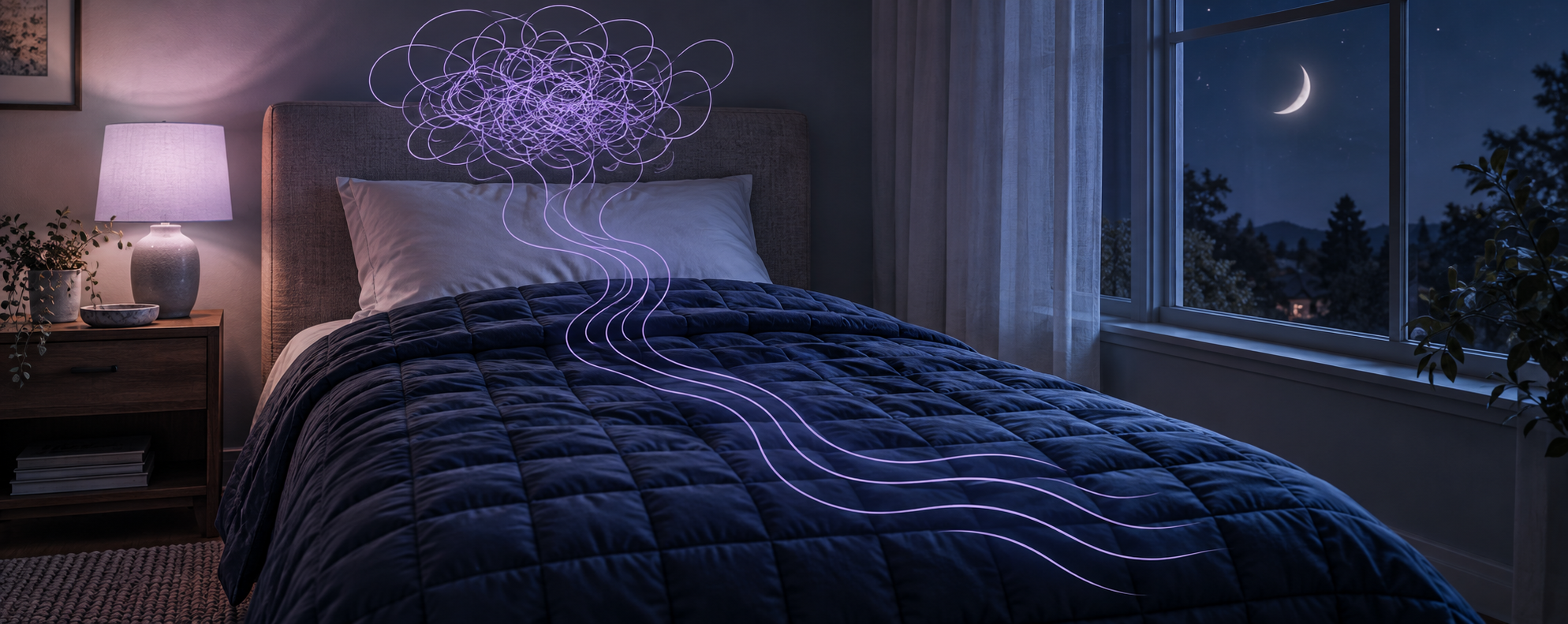
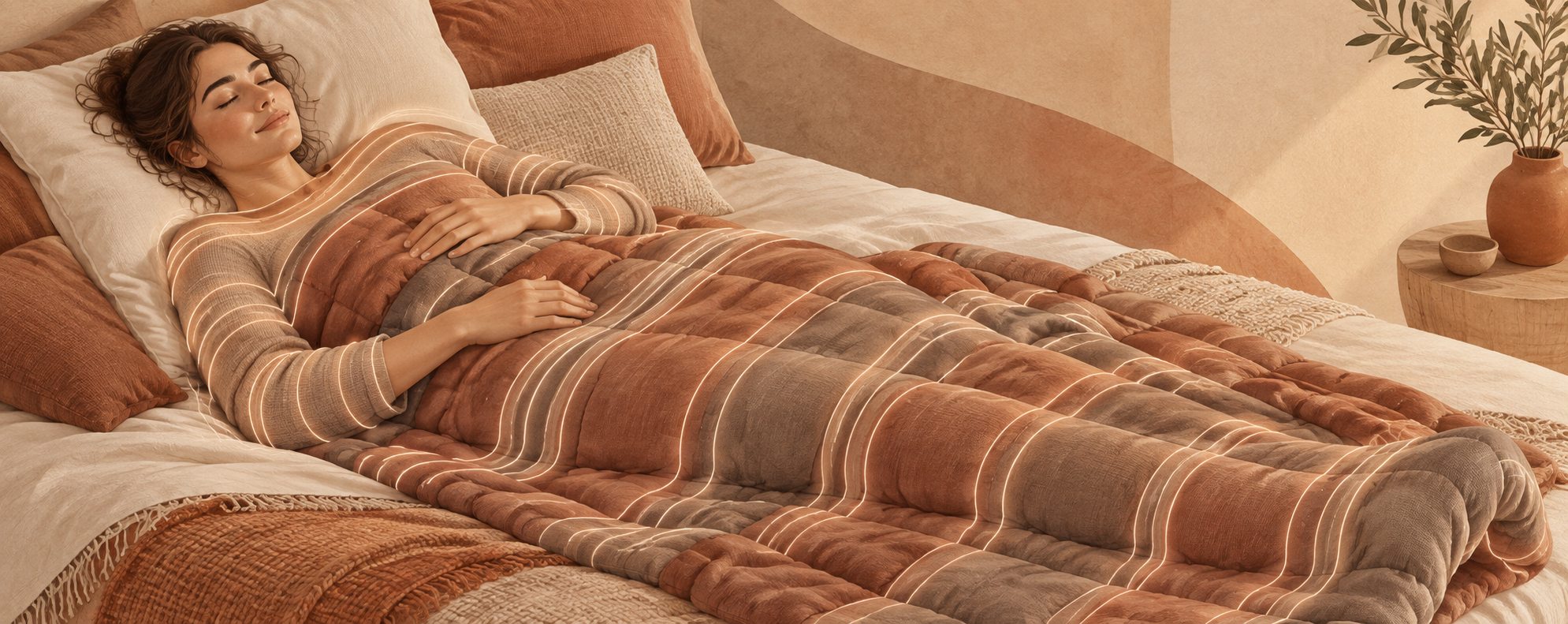
Deep pressure stimulation weighted blanket use has grown from a niche occupational therapy tool into one of the most common ways people manage everyday stress at home, and the science behind it is more established than most wellness trends get. In short: deep pressure stimulation is firm, even pressure applied across the body — through a hug, a swaddle, or a weighted blanket — that's associated with shifting the nervous system into a calmer state. A deep pressure therapy weighted blanket is simply the most convenient, at-home way most people access it.
What Is Deep Pressure Therapy?
Deep pressure therapy (also called deep touch pressure or deep pressure stimulation) is a therapeutic technique that applies firm, gentle pressure across the body — through hugging, swaddling, holding, or a weighted object like a deep pressure blanket. It isn't a new wellness trend dressed up in clinical language; it has real roots in occupational therapy, where it's been used for decades to help people with sensory-processing needs self-regulate and calm down.
Where Deep Pressure Therapy Actually Comes From
Most of the modern research and popular use of deep pressure therapy traces back to Dr. Temple Grandin, an animal scientist and autism researcher who is herself autistic. As a teenager visiting a relative's ranch in the 1960s, Grandin noticed that cattle passing through a squeeze chute — a device that applies firm pressure to the sides of the animal's body — would calm down noticeably once inside it. She adapted that idea into what became known as the "hug machine" or "squeeze machine": a padded, V-shaped device that let a person apply controlled pressure to their own body to ease anxiety.
This wasn't just an interesting personal invention — it held up under actual research. A pilot study published in the American Journal of Occupational Therapy tested the hug machine on 12 children with autism, measuring both behavioral ratings and physiological stress response (galvanic skin response, a measure of nervous system arousal). The children who received deep pressure showed a significant reduction in tension and a smaller, marginally significant reduction in anxiety compared to children who didn't. It's a small study by modern standards, but it's a genuine, measured result — not just anecdote — and it's the foundation a lot of later deep pressure research builds on.

How Does Deep Pressure Therapy Actually Work?
The explanation usually starts with the two main branches of the autonomic nervous system. The sympathetic nervous system is your "fight or flight" system — it's what responds to light, sudden sensations (a tap on the shoulder, a gust of wind) and prepares your body to react. The parasympathetic nervous system is the opposite: it governs "rest and digest" functions, and when it's active, your heart rate slows, your breathing deepens, and your body settles.
Firm, even pressure — the kind applied by a hug or a weighted blanket — is thought to help shift activity away from the sympathetic system and toward the parasympathetic one. Some researchers have also proposed that deep pressure may influence serotonin and dopamine, neurotransmitters connected to mood, sleep, and a sense of calm. It's worth being precise here: this is a proposed mechanism supported by a mix of physiological studies and clinical observation, not something researchers consider fully settled. The nervous-system-shift explanation has decent support; the specific neurotransmitter story is more of a working theory than a proven pathway. Either way, it lines up with how people consistently describe the sensation in practice — one YNM customer described the feeling simply: it's like a firm, gentle hug that grounds her nervous system and calms her down within minutes.
Who Tends to Benefit Most from Deep Pressure Therapy?
Deep pressure therapy isn't limited to any one group — plenty of people use it just to unwind after a stressful day. But research and clinical use have focused most on a few specific groups, where the calming effect tends to be more pronounced or more thoroughly studied:
- Autism and sensory processing differences — the original population Grandin's work focused on, and still the most researched group
- ADHD — we cover the sleep-related research in detail in our dedicated ADHD guide
- Anxiety — see our full breakdown of the anxiety research
- Restless legs syndrome and general sleep difficulty — covered in our sleep and RLS guide
- PTSD and general stress — less formally studied than the above, but commonly reported anecdotally
If any of those describe your situation specifically, the linked guides go much deeper into the research for that condition. This article is meant as the mechanism-level overview that ties them together.
Deep Pressure Therapy Products for Adults
A weighted blanket is the most common way adults access deep pressure at home, but it isn't the only one. Legitimate deep pressure therapy products for adults include:
- Weighted blankets — the most researched and widely used option, distributing pressure evenly across the whole body while you sleep or relax
- Weighted eye masks — a smaller, lower-commitment way to try the sensation; we cover this in detail in our weighted eye mask guide
- Compression clothing — worn throughout the day rather than just at bedtime, popular with people managing sensory processing needs
- Weighted lap pads — used at a desk or in a chair, for pressure without needing to lie down
- Therapy animals — some trained therapy dogs are specifically taught to lie across a handler's lap or chest during moments of anxiety
- Deep pressure massage — a professional, hands-on version of the same underlying principle
Of these, a weighted blanket remains the easiest to work into an existing routine, since it doesn't require appointments, training, or wearing something all day.
How to Get Started with a Deep Pressure Blanket
If you're trying a deep pressure therapy blanket for the first time, the weight matters more than almost anything else. The standard starting point is roughly 10% of your body weight, plus about a pound — our full weight guide walks through the exact numbers. YNM's Weighted Blanket Line covers that full range, and if you tend to sleep warm, the Cooling Line delivers the same pressure in a more breathable fabric.
FAQ
What is deep pressure stimulation, in simple terms?It's firm, even pressure applied across the body — through a hug, a weighted blanket, or similar tools — that's associated with a calmer, more settled nervous system.
Does a deep pressure therapy blanket actually work?There's real research support, starting with Temple Grandin's original hug machine studies and extending into more recent research on weighted blankets specifically for anxiety, ADHD, and sleep. It's best understood as a well-supported comfort tool, not a medical treatment.
Who invented deep pressure therapy?Modern deep pressure therapy is most closely associated with Dr. Temple Grandin, who developed the "hug machine" in the 1960s after observing that cattle calmed down when pressure was applied through a squeeze chute.
What are the best deep pressure therapy products for adults?Weighted blankets are the most researched and widely used option, followed by weighted eye masks, compression clothing, weighted lap pads, and professional deep pressure massage.
How heavy should a deep pressure blanket be?Roughly 10% of your body weight plus about a pound is the standard starting guideline, rounding up slightly if you're between two sizes.