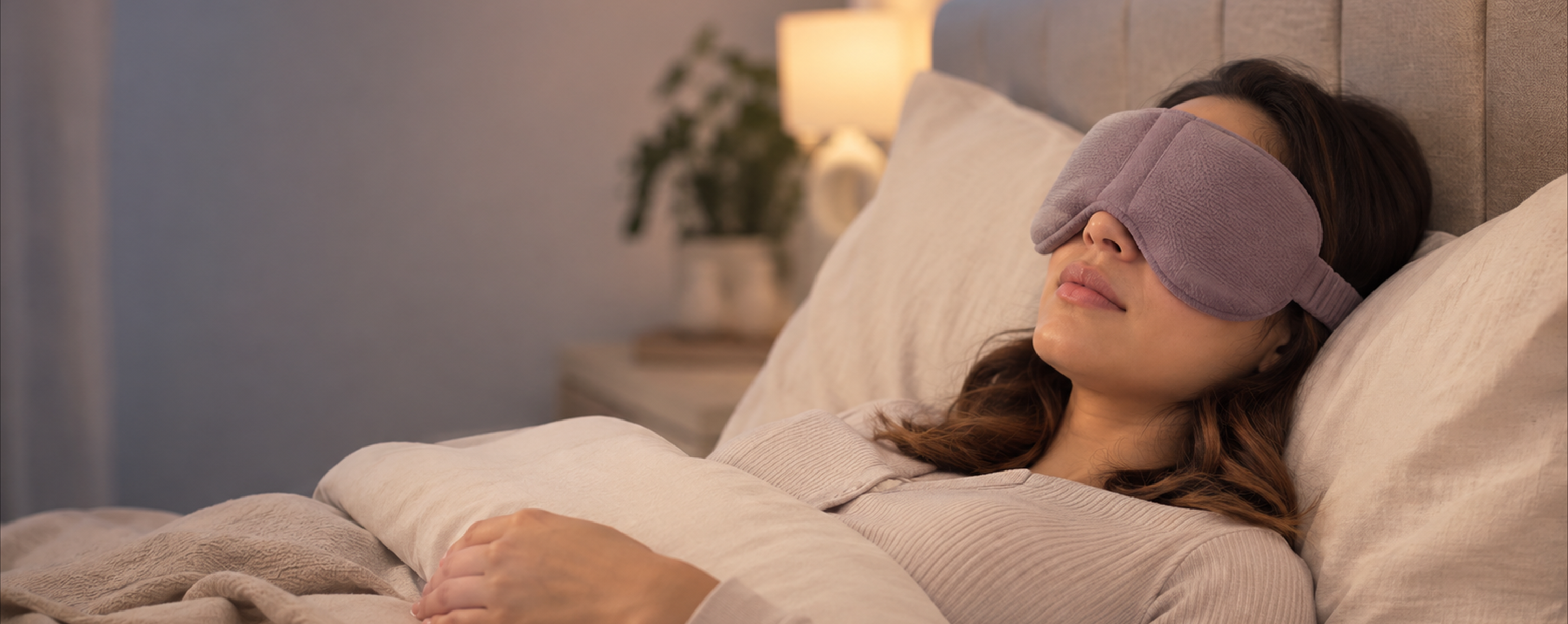
A weighted eye mask is essentially a regular eye mask's calmer, more grounding cousin: it blocks light the same way a standard sleep mask does, but adds a small amount of evenly distributed weight — usually glass microbeads — that rests gently around your eyes and temples. The combination of total darkness and gentle pressure is what makes a weighted sleep mask feel different from a basic eye mask for sleep, and it's why a lot of people who've never gotten along with regular eye masks end up liking this version instead.
If you've used a weighted blanket before, the underlying idea is exactly the same, just scaled way down: consistent, gentle pressure that helps your nervous system settle, applied to a much smaller and more sensitive area of your body.
What Is a Weighted Eye Mask, Exactly?
A weighted eye mask is a fabric mask filled with a small amount of weighted material — typically fine glass beads — distributed across the eye and brow area. Unlike a standard silk or cotton eye mask, which does nothing but block light, a weighted version adds gentle, consistent pressure around the eyes and temples through the same deep pressure stimulation mechanism used in weighted blankets. Many weighted eye masks, including YNM's, also include a dual-sided fabric design so you can use a cooling side or a plusher side depending on preference or season.
How Does a Weighted Eye Mask Actually Work?
Two separate mechanisms are doing the work here, and it's worth understanding both. First, blocking essentially all light helps your body produce and maintain melatonin, the hormone that signals it's time to sleep — even small amounts of ambient light (a hallway lamp, a phone charger LED, early morning sun through curtains) can interfere with this process, so full blackout alone is a meaningful benefit before weight even enters the picture.
Second, the gentle pressure around your eyes and temples works through deep pressure stimulation, the same calming mechanism behind weighted blankets. Firm, even pressure is associated with activating the parasympathetic nervous system — your body's rest-and-relax mode — which is part of why the sensation can feel grounding rather than restrictive, even in an area as sensitive as your face. It's worth noting that most of the rigorous clinical research on deep pressure stimulation has been done with weighted blankets rather than eye masks specifically; the eye mask version is a reasonable extension of the same well-studied mechanism, but it hasn't been tested in dedicated clinical trials to the same degree.
What Are the Benefits of a Weighted Sleep Mask?
Falling asleep faster. Total darkness combined with gentle facial pressure is a combination a lot of people find noticeably more calming than either one alone — it gives your mind less to hold onto right as you're trying to wind down.
Headache and light-sensitivity relief. A large share of people who get migraines are sensitive to light, so full blackout can make a real difference during a headache, independent of anything the weight itself is doing. Some weighted eye masks, including YNM's, also offer a hot-and-cold option — a warmed mask can feel soothing for tension or sinus discomfort, while a cooled one is often preferred for puffiness or a throbbing headache.
Calming an overactive mind while traveling. This is one of the most common real-world use cases, and for good reason — travel tends to combine unpredictable light, unfamiliar surroundings, and a racing mind all at once. One YNM customer described bringing hers on every flight specifically for this reason: it blocks the light, and the soft pressure helps settle her mind mid-travel in a way a regular eye mask never quite did.
A lower-commitment way to try deep pressure stimulation. If you're curious about weighted products but not ready to invest in a full weighted blanket, a weighted eye mask is a much smaller, less expensive way to see whether the sensation works for you.
How to Use a Weighted Eye Mask
Using one is straightforward, but a few details make the experience noticeably better:
- Position it before you're too settled to adjust. Put the mask on and adjust the strap while you're still upright or sitting, rather than fumbling with it once you're already lying down in the dark.
- Center the weight over your eyes and brow, not your cheeks. Most masks are designed to rest naturally in the right spot, but it's worth double-checking the fit the first few times you use one.
- Use the temperature feature if your mask has one. Warm it slightly for tension or sinus relief, or chill it for puffiness or headache relief — check your specific mask's care instructions before microwaving or freezing it.
- Give it a few nights before judging it. Like any new sleep accessory, it can take a couple of nights to get used to the sensation, especially if you've never used a weighted product before.
- Remove it if it ever feels uncomfortable or restrictive. A weighted eye mask should feel calming, not tight — if it's leaving marks, causing headaches, or feels heavy in an unpleasant way, it's either the wrong weight or the wrong fit for you.
Weighted eye masks aren't recommended for infants or young children, and anyone with a facial skin condition, recent eye surgery, or a tendency toward claustrophobia should check with a doctor before trying one.
How to Choose a Weighted Eye Mask
Weight matters here even more than it does with a blanket, simply because your eye area is so much more sensitive. A common guideline is roughly 1–2% of your body weight rather than the 10% used for blankets — for context, that's typically just a few ounces, not pounds. Too light and you won't feel much of an effect; too heavy and it can cause discomfort or even headaches instead of relieving them.
Beyond weight, look for a breathable fabric (bamboo or a similar moisture-wicking material tends to feel better against skin than synthetic fabric over a full night), a strap that stays put without feeling tight, and — if you want the added benefit — a mask with a genuine hot-and-cold feature rather than one that's purely decorative.
YNM's Weighted Eye Mask uses a bamboo-and-minky dual-sided design with glass bead fill, so you get a breathable, cooling side and a plusher side in one mask, plus hot-and-cold therapy for headache or sinus relief. It's part of YNM's broader accessories line, alongside other smaller sleep and wellness pieces if you're looking to build out a full nighttime routine.
FAQ
Is a weighted eye mask safe to sleep in every night?For most healthy adults, yes. Just make sure the weight and fit are comfortable rather than tight, and check with a doctor first if you have a facial skin condition, recent eye surgery, or claustrophobia.
How heavy should a weighted eye mask be?A common guideline is around 1–2% of your body weight, which is much lighter than the 10% rule used for weighted blankets. Comfort matters more than hitting an exact number.
Can a weighted eye mask help with headaches?It can help indirectly — blocking light is genuinely useful for light-sensitive headaches like migraines, and a hot-or-cold feature (if your mask has one) can add extra relief for tension or sinus discomfort.
Is a weighted eye mask good for travel?Yes, it's one of the most common real-world uses. The combination of full light-blocking and calming pressure tends to work well for the unpredictable light and restless mind that come with flights and unfamiliar sleep environments.
What's the difference between a weighted eye mask and a regular sleep mask?A regular eye mask only blocks light. A weighted version adds gentle, evenly distributed pressure around the eyes and temples through the same deep pressure stimulation mechanism used in weighted blankets, which many people find more calming than blackout alone.