
If you're lying in bed wide awake wondering how can you make yourself tired, the answer usually isn't one trick — it's a combination of lowering your body temperature, calming your nervous system, and giving your mind less to hold onto. None of it requires sleeping pills, and most of it works within 15 to 30 minutes if you do it consistently.
What Actually Makes You Feel Tired?
Feeling sleepy is mostly your body responding to two things: a drop in core body temperature and a nervous system that's shifted out of "alert" mode. If you're looking for how to get tired fast, anything that speeds up either of those — a cooler room, a calming pre-sleep routine, slower breathing — tends to help. Anything that works against them — screens, late meals, a too-warm bedroom — tends to keep you wired longer than you'd like.
How to Get Tired Fast: What to Do Before Bed
Take a warm shower or bath an hour before bed. This sounds backwards, but it works because of how your body regulates temperature: the warmth brings blood to your skin's surface, and as you cool down afterward, your core temperature drops faster than it would have otherwise — and a dropping core temperature is one of the body's natural signals for sleep.
Keep the bedroom cool. Most sleep experts recommend somewhere in the 60–67°F (15–19°C) range. If your feet get cold once the room cools down, wearing socks to bed is a reasonable fix — warm feet paired with a cool room tends to feel more comfortable than a warm room overall.
Skip the heavy meal and the nightcap. Eating a large meal close to bedtime keeps your digestive system active when it should be winding down, and both caffeine and alcohol interfere with falling and staying asleep, even if alcohol makes you feel drowsy at first.
Put the phone down earlier than you think you need to. Blue light from screens works against your body's natural wind-down signals. If you can manage even 30–60 minutes screen-free before bed, it makes a real difference.
How to Get Tired Fast Once You're Already in Bed
If you're already in bed and still feel wired, these are the techniques worth trying before you resign yourself to another hour of scrolling:
Progressive muscle relaxation. Starting with your face and working down to your feet, tense each muscle group for about 10 seconds, then release. It takes 10 minutes or less and gives your mind something specific to focus on other than the fact that you can't sleep.
4-7-8 breathing. Inhale through your nose for 4 seconds, hold for 7, exhale slowly through your mouth for 8. Repeat the cycle four times. Slower, longer exhales are associated with calming the nervous system, which is part of why this kind of breathing shows up in so many relaxation techniques.
A cup of chamomile tea. Chamomile contains a compound called apigenin that interacts with the same calming brain receptors as some anti-anxiety medications, and a couple of small clinical trials have found modest improvements in sleep quality with regular chamomile use. It's worth being honest that the evidence is mixed rather than overwhelming — one placebo-controlled trial actually found the placebo group slept slightly longer — but it's a low-risk, pleasant part of a wind-down routine either way.
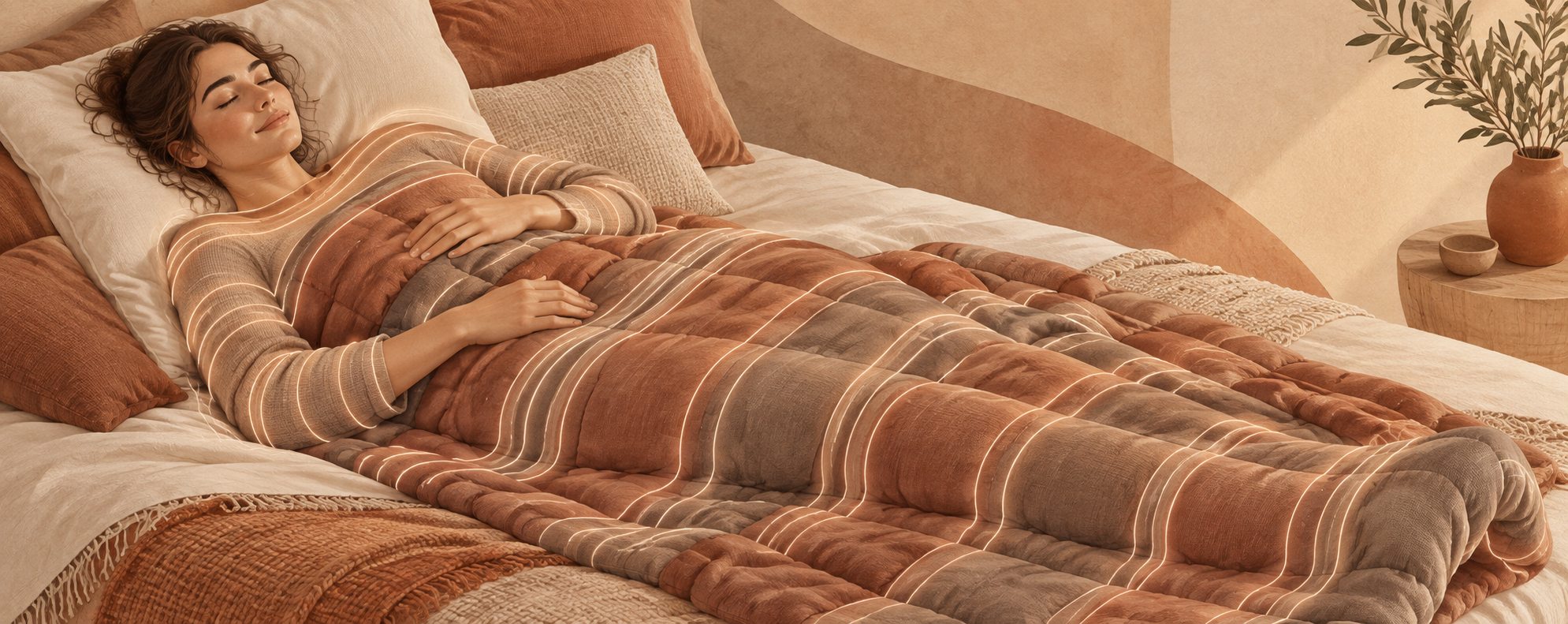
A weighted blanket for sleep. The deep, even pressure from a weighted blanket for sleep works through a mechanism called deep pressure stimulation, which we cover in full in our deep pressure stimulation guide — in short, firm pressure is associated with shifting your nervous system toward a calmer, more parasympathetic state. One YNM customer described the effect directly: the deep pressure quickly triggers her relaxation response, and where she used to lie awake for an hour, she's now sleepy within 15 minutes. If you want the fuller research picture on weighted blankets and sleep specifically, our sleep and restless legs guide goes deeper into the clinical trials behind it.
Read something low-stakes. A physical book (not a backlit screen) can help ease you toward sleep, as long as it's not the kind of page-turner that keeps you reading "just one more chapter."
Get up if it's been more than 15 minutes. Lying in bed frustrated and wide awake trains your brain to associate the bed with wakefulness instead of sleep. Get up, do something calm and boring in dim light — folding laundry, light stretching — and go back to bed once you actually feel sleepy again.
Choosing a Weighted Blanket to Help You Get Tired
If a weighted blanket sounds like the right addition to your routine, the starting point is the same as always: roughly 10% of your body weight plus about a pound, which our full weight guide breaks down in detail. YNM's Weighted Blanket Line covers that range, and if a warm blanket tends to work against you rather than for you, the Cooling Line delivers the same pressure without the extra heat.
FAQ
How can you make yourself tired quickly?Lowering your body temperature (a warm shower followed by a cool room), calming your nervous system (breathing exercises, progressive muscle relaxation, deep pressure from a weighted blanket), and cutting out screens and late meals are the most reliable combination.
How do you get tired fast when you're not sleepy at all?Start with the things that work against you — a warm room, a screen in your hand, caffeine too late in the day — and remove them first. Then add a calming technique like 4-7-8 breathing or progressive muscle relaxation.
Does a weighted blanket actually make you tired?It doesn't make you tired in the way caffeine withdrawal or exercise does, but the deep, even pressure is associated with calming the nervous system, which can make it easier to relax into sleep once you're already tired.
Is it bad to just lie in bed until you fall asleep?If it's been more than about 15 minutes and you're getting frustrated, it's generally better to get up, do something calm in dim light, and go back to bed once you feel sleepy — lying there frustrated can train your brain to associate bed with being awake.
Does chamomile tea actually help you get tired?The evidence is modest rather than definitive — some small trials show improved sleep quality, though not all of them show a clear advantage over placebo. It's low-risk and worth trying as part of a routine, just not a guaranteed fix on its own.