If you've ever searched for a heavy blanket and ended up looking at weighted blankets, you're not alone. The two terms get mixed up all the time, and in everyday speech people use them for the same thing. They aren't quite the same, though. This guide explains the real difference, how to tell when a blanket is too heavy, and how to get a soft option that still gives you that grounded, cozy feel.
Heavy Blanket vs Weighted Blanket: What Is the Real Difference?
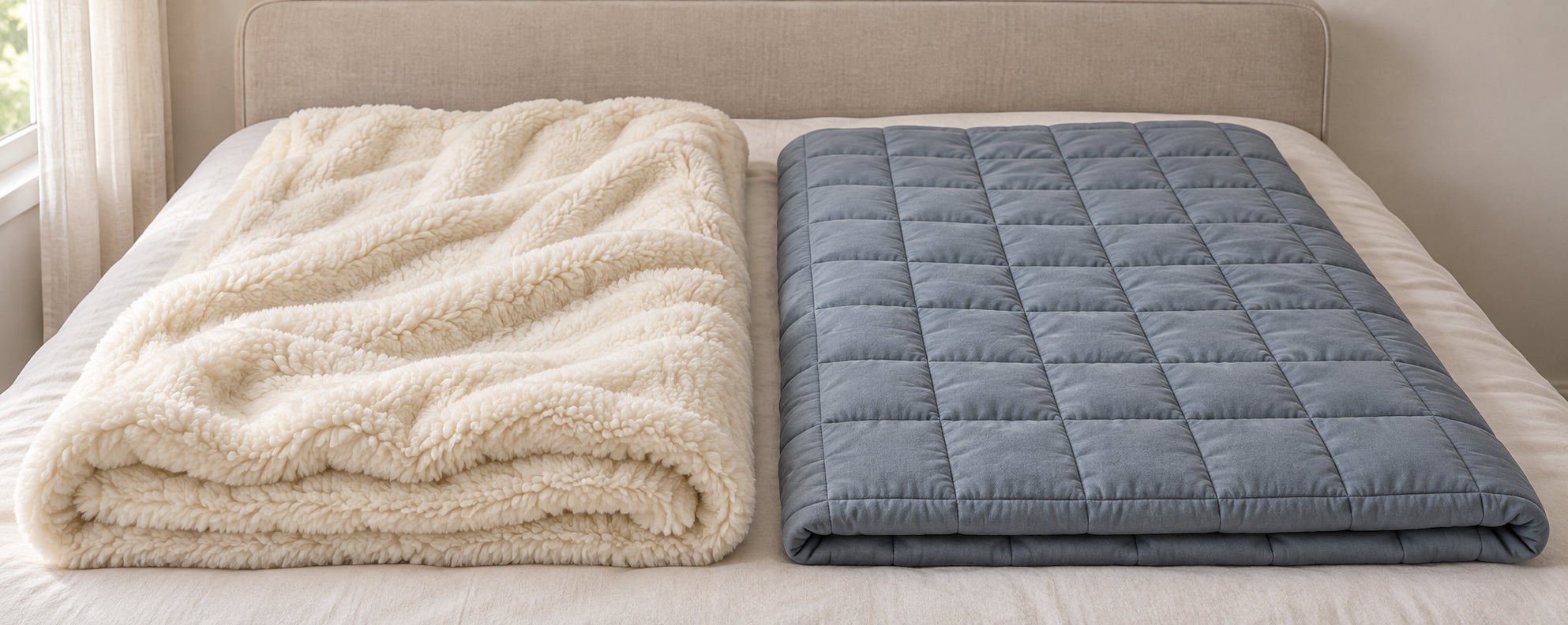
The main difference is how the weight is made and where it sits. A heavy blanket is heavy because it's thick: dense fleece, a deep quilt, or a stuffed comforter. A weighted blanket is heavy on purpose, with small beads or heavier yarn spread evenly across its surface so the weight is the same everywhere.
| Heavy blanket | Weighted blanket | |
|---|---|---|
| Where the weight comes from | Thick fabric or filling | Added beads or heavier yarn |
| How it's spread | Uneven; it shifts and bunches | Even, held in place by stitched sections |
| How you choose it | By thickness and warmth | By weight, often based on body weight |
| Typical goal | Warmth | A steady, hugging feel |
| Heat | Warm in proportion to thickness | Often warm too, depending on fabric |
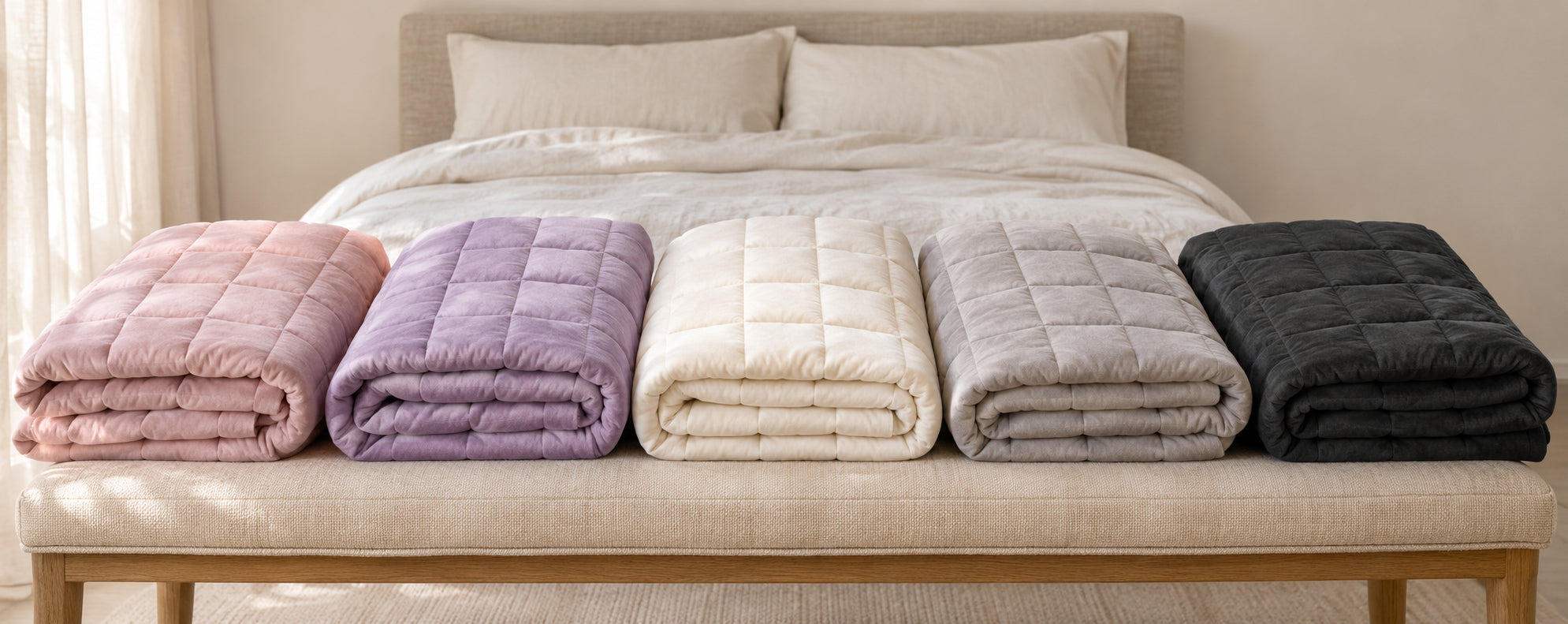
YNM's weighted blankets use either beads or heavier yarn for the weight, depending on the style, and they come in a wide range of weights. You can see the range in our weighted blanket collection.
Is a Heavy Blanket Just a Weighted Blanket?
No, but the line can feel blurry because people use "heavy blanket" for several things. It can mean a thick winter comforter, a plush fleece throw, or a weighted blanket described casually. Search results for the term are a mix of all three.
What separates a true weighted blanket is the intent and the construction. The weight is planned, measured, and kept in place so it doesn't slide to one side. A thick blanket may feel heavy when you pick it up, but it doesn't apply a steady, even load across your body.
That distinction matters most to the people who actually notice it. One YNM customer told us they swapped a thick, heavy fleece blanket for a weighted one: it wasn't just bulky warmth, and the even, gentle pressure helped them relax. That's one person's experience, not a guarantee, but it captures the difference people usually describe.
How Heavy Is Too Heavy for a Heavy Weighted Blanket?
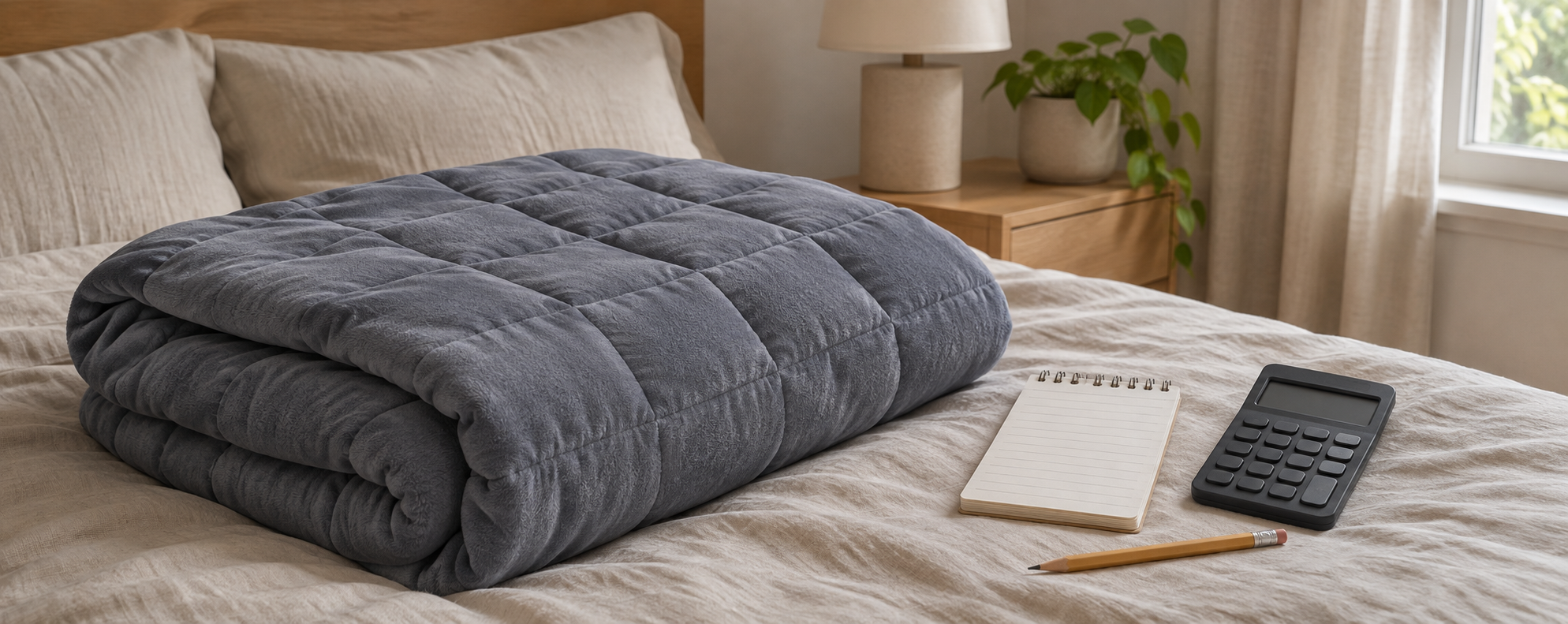
A common rule of thumb is to pick a weighted blanket at roughly 10% of your body weight. That figure is a popular guideline rather than a proven standard, and some sources note it lacks solid citation. The same sources add that if a blanket feels wrong after following the guideline, it's more likely too heavy than too light.
A heavy weighted blanket shouldn't make it hard to breathe, turn over, or get out from under it. If it does, go down a weight or two. Children are a special case: the blanket needs to be sized for the child, and safety findings from healthy adults can't be assumed to carry over to kids. For anyone with a medical condition or a child in the picture, it's sensible to check with a doctor first.
If you want the full weight-by-weight breakdown, our weighted blanket weight guide goes through it step by step.

Can You Get a Soft Heavy Blanket That Is Also Weighted?
Yes. Weight and softness are separate qualities, so a soft heavy blanket is mostly a matter of choosing the outer fabric. A plush cover can sit on top of the same kind of even weight you'd get in any weighted blanket.
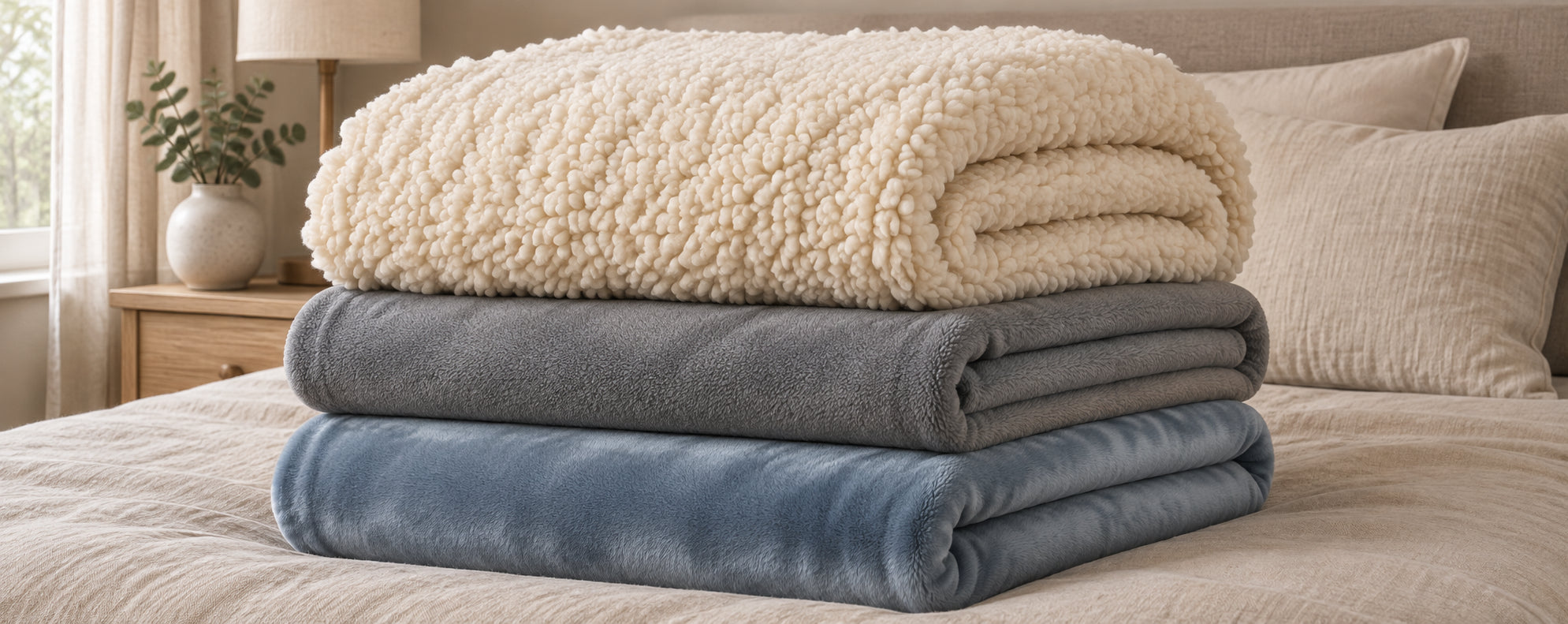
YNM's Soft line is built around this idea. At the time of writing it includes a faux-fur weighted blanket and a sherpa fleece weighted blanket, both described on the site as soft options. You can browse them in the Soft line.
Softness is also where many people feel the gap between an ordinary heavy blanket and a weighted one. One customer described their old heavy blanket as stiff and lumpy, while their weighted blanket felt soft with steady, distributed weight. A plain thick blanket can feel uneven because its filling shifts over time, whereas stitched sections keep the weight where it belongs.
Two small things are worth knowing. Plush fabrics tend to feel warmer, so they suit cooler rooms better than hot ones. And softer, fluffier fabrics can collect lint or hair more easily, so keep that in mind if you have pets.
Which Is Better for Sleep: A Heavy Blanket or a Weighted Blanket?
There's no clear winner, and the research is thinner than marketing makes it sound. A 2018 systematic review found that weighted blankets may reduce anxiety in some limited settings, but found insufficient evidence that they help with insomnia, partly because studies were small and inconsistent. A significant placebo effect is also part of the picture.
So the honest answer is that the choice is mostly about comfort. Many people enjoy the feeling of even pressure, and for them a weighted blanket is the better pick. Others prefer simple warmth and a lighter touch, and a regular heavy blanket suits them fine. Neither is a treatment, and a blanket shouldn't replace medical advice for a sleep or anxiety problem.
How Should You Choose Between Them?
Think about what you want the blanket to do, then match it to the right type.
- You want warmth on a cold night: a heavy blanket or thick comforter is usually enough, and it's easy to kick off.
- You like a steady, hugging pressure: a heavy weighted blanket is the one that delivers it.
- You run hot: look for a breathable cover and a lower weight, or lighter fabrics, since many weighted blankets trap heat.
- You want both softness and weight: choose a plush outer fabric, such as the options in the Soft line.
- You're not sure: start light. It's easier to move up a weight than to live with one that's too heavy.
Whichever you pick, check the care label before washing, since heavy and weighted blankets can be too bulky for a home machine.
FAQ
What is the difference between a heavy blanket and a weighted blanket?
A heavy blanket gets its weight from thick fabric or filling, so the weight is uneven and shifts around. A weighted blanket adds beads or heavier yarn in stitched sections, so the weight is spread evenly and chosen on purpose.
Is a heavy comforter the same as a weighted blanket?
Not quite. A heavy comforter is thick and warm, but it isn't designed to apply measured, even pressure. A weighted comforter combines the two ideas, which is a separate topic.
How heavy should a heavy weighted blanket be?
A common starting point is about 10% of your body weight, treated as a guideline rather than a rule. If it feels too heavy, choose a lower weight.
Can a soft heavy blanket also be weighted?
Yes. The weight comes from the filling or yarn, and the softness comes from the outer fabric, so you can have both. Plush fabrics tend to be warmer, so consider your room temperature.
Do weighted blankets help you sleep better?
Some people feel calmer and more relaxed under one, but research on sleep is limited. Treat it as a comfort choice rather than a cure.