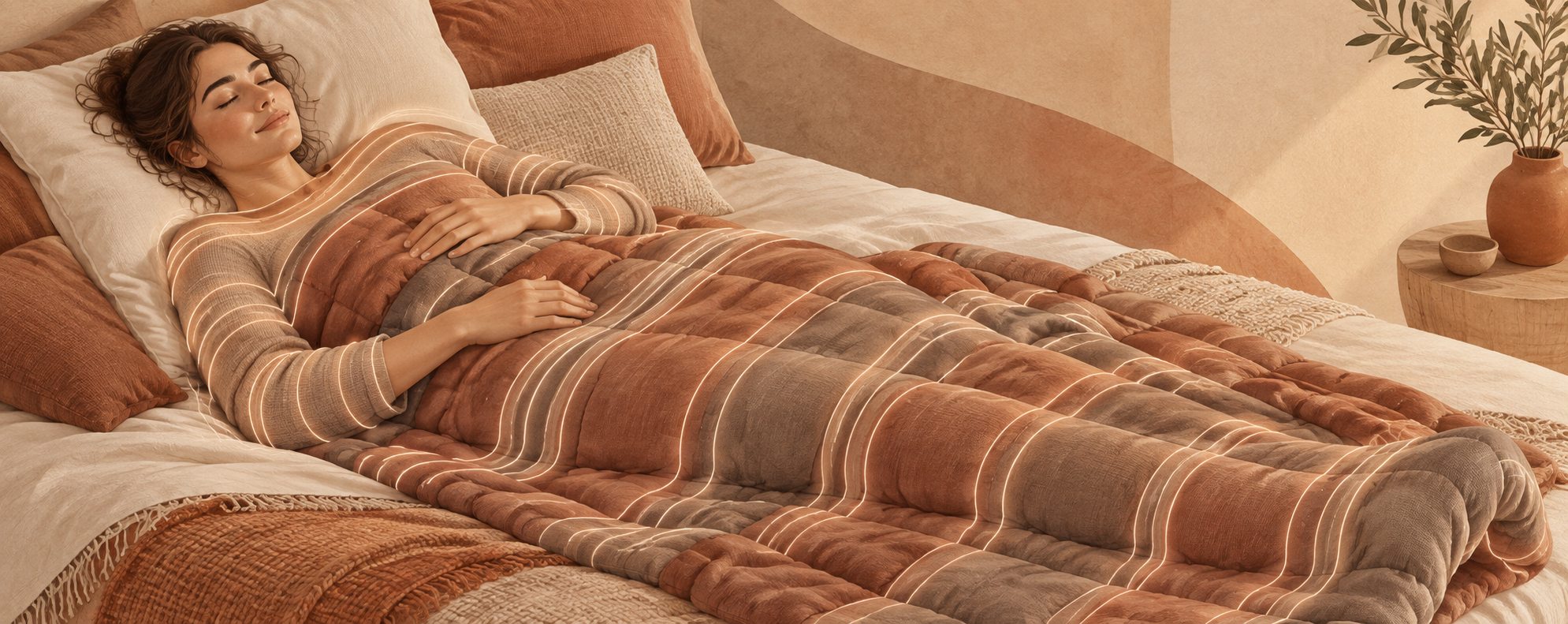
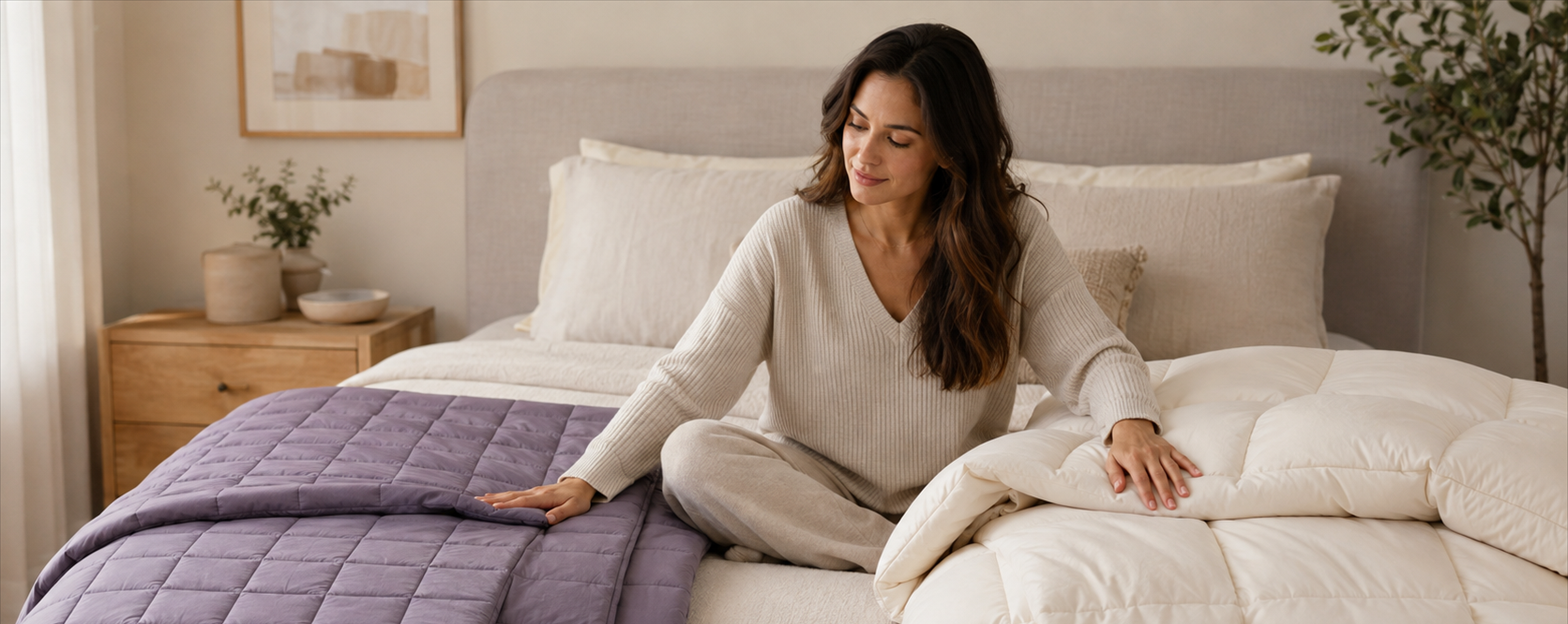
A weighted comforter is essentially a weighted blanket built like a real comforter: fluffy, oversized, and designed to overhang the bed the way a traditional comforter does, rather than sitting flat like most weighted blankets. Both use the same deep pressure stimulation mechanism, but a weighted comforter adds insulating fill around the weight, so you get calming pressure and genuine warmth in one piece — no separate top comforter needed. A standard weighted blanket, by contrast, is usually flatter, sized closer to the bed itself, and often paired with a regular comforter or duvet on colder nights.
What Is a Weighted Comforter, Exactly?
A weighted comforter combines two things that are normally separate: the deep, even pressure of a weighted blanket, and the fluffy, insulated look and feel of a traditional comforter. YNM's version, for example, uses a box-stitched, 3D inner-weighted construction with nine layers, which keeps the glass beads and fluffy fill both securely in place — reducing the risk of beads shifting or leaking the way they sometimes can in simpler weighted blanket designs. It's also cut to true comforter sizing, meaning it's intentionally oversized to overhang the edges of the mattress, giving it the fuller, more finished look of a comforter rather than the flatter, more functional look of most weighted blankets.
How Is a Weighted Comforter Different From a Regular Weighted Blanket?
|
|
Weighted Blanket |
Weighted Comforter |
|---|---|---|
|
*Construction |
Glass beads or dense knit, flat compartments |
Glass beads plus fluffy insulating fill, quilted layers |
|
*Warmth |
Moderate, depends on fabric |
Higher — built with insulation in mind |
|
*Sizing/Drape |
Fits closer to body, doesn't overhang bed |
Oversized, drapes and overhangs like a true comforter |
|
*Look |
Function-first, simpler aesthetic |
Designed to look like a finished bedspread |
|
*Best for |
Layering under a separate comforter |
Cold sleepers who want one all-in-one layer |
The practical upshot: a weighted comforter is trying to replace two things at once — your calming weighted layer and your warm top layer — while a standard weighted blanket is more often one part of a layered bedding setup.
One YNM customer summed up exactly why that combination works for her: the weighted comforter gives her the calming deep-pressure feel she wants, plus enough warmth that she doesn't need to add an extra blanket on cold nights. That's the core appeal in practice — one piece of bedding doing the job that would otherwise take two.
Who Should Choose a Weighted Comforter?
A weighted comforter tends to make the most sense if you sleep cold, want your bedding to double as your finished bedroom look rather than something you cover with a separate comforter, or you'd simply rather manage one piece of bedding instead of two. It's also a natural fit for couples who want a single, oversized layer rather than juggling a flat weighted blanket and a comforter on top of it.
A standard weighted blanket still makes more sense if you run warm, prefer to control warmth and weighted pressure separately (using a lighter comforter in summer and a heavier one in winter, for example), or you want the flexibility of swapping out your top layer without changing your weighted layer.
What's the Best Weighted Comforter Size, Including Queen?
If you're trying to figure out the best weighted comforter size for your bed, sizing works a bit differently for a weighted comforter than for a standard weighted blanket, since it's meant to overhang the mattress rather than match it edge to edge. YNM's Weighted Comforter, for example, comes in Twin, Full/Queen, and King, with a Full/Queen weighted comforter sized at 90" x 90" — noticeably larger than a standard queen weighted blanket — specifically so it drapes properly on all sides. Weight options for Full/Queen typically range from 15lb up to 50lb, giving you the same flexibility to land near 10% of your body weight that you'd have with a standard weighted blanket (our full weight guide covers the exact math either way).
A weighted comforter queen is the size most couples end up comparing against a King, so for couples sharing a Queen or King weighted comforter, the same general approach applies as with any shared weighted bedding: base the weight on the lighter or more pressure-sensitive sleeper, or aim for roughly 7.5% of your combined body weight rather than 10% of either person's individually.
FAQ
Is a weighted comforter warmer than a weighted blanket? Generally yes. A weighted comforter is built with insulating fill around the weight specifically to provide warmth, while a standard weighted blanket's warmth depends more on the outer fabric alone.
What size is a weighted comforter queen? A Full/Queen weighted comforter is typically sized larger than a standard queen weighted blanket — for example, 90" x 90" — so it can drape and overhang the mattress the way a traditional comforter does.
Do I still need a separate comforter if I buy a weighted comforter? Usually not. That's the main point of a weighted comforter — it's designed to be your only top layer, combining weight and warmth in one piece rather than requiring a weighted blanket plus a separate comforter.
What is the best weighted comforter weight to choose? The same general rule applies as with any weighted bedding: aim for roughly 10% of your body weight, rounding up if you're between two sizes. For couples, basing it on the lighter sleeper or using roughly 7.5% of combined body weight is a common approach.
Is a weighted comforter more expensive than a weighted blanket? It can be, since it combines two functions (weight and insulation) and typically uses a more layered, quilted construction. Whether it's worth the difference usually comes down to whether you'd otherwise be buying a separate comforter anyway.