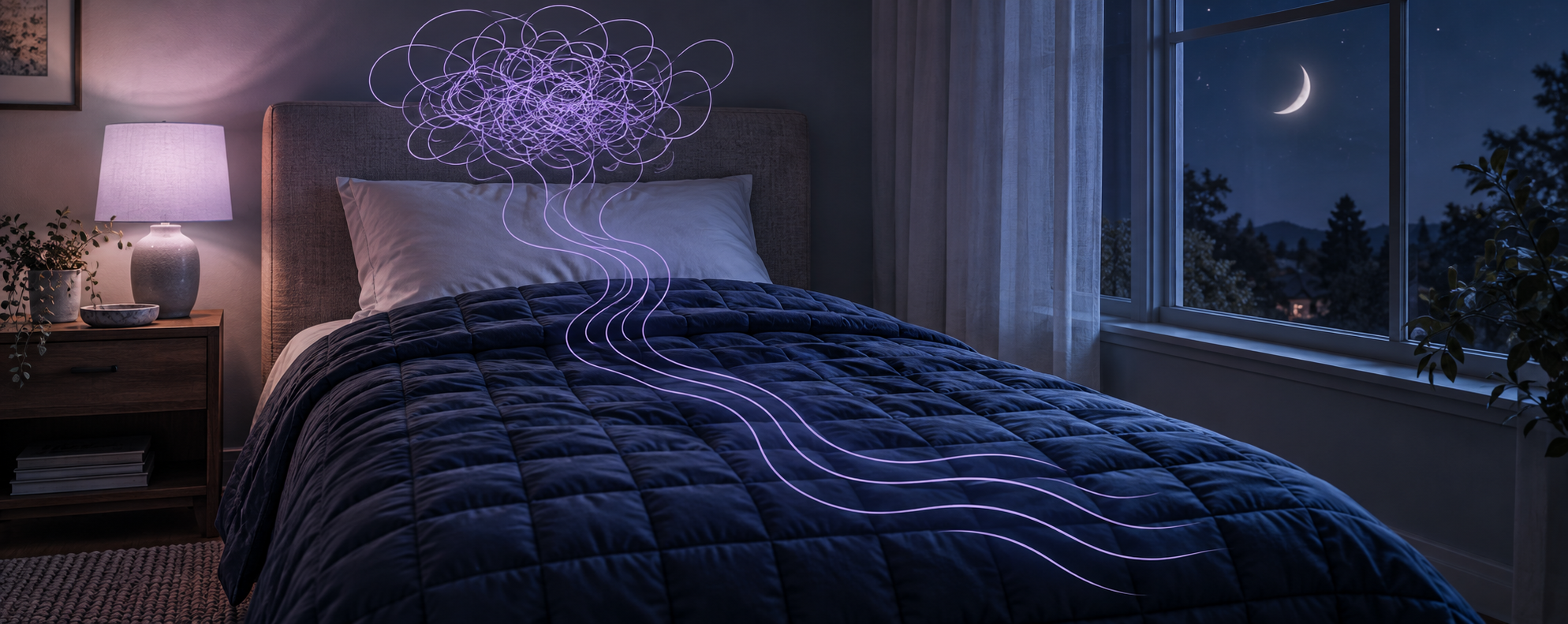

Research on the connection between a weighted blanket for anxiety and real symptom relief is genuinely encouraging, but it comes with an important caveat: the strongest evidence is in people with diagnosed anxiety or other mental health conditions, not the general population. Multiple clinical studies and at least one meta-analysis have found that weighted blankets produce a small but measurable reduction in anxiety symptoms for psychiatric patients. For everyday, non-clinical anxiety, the research is thinner — which doesn't mean a weighted anxiety blanket won't help you, just that the science hasn't caught up to how widely they're now marketed.
This isn't a claim that a weighted blanket treats or cures anxiety, and it isn't a replacement for therapy or medical care. What it is: a well-studied, low-risk, non-drug tool that a growing body of research associates with a calmer nervous system.
What Does the Research Actually Say?
A systematic review and meta-analysis of randomized controlled trials found that weighted blankets have a small but statistically positive effect on reducing anxiety in patients with mental disorders, along with improvements in insomnia. A separate meta-analysis focused specifically on psychiatric inpatient and outpatient populations reached a similar conclusion: people with diagnosed psychiatric conditions who used weighted blankets showed statistically significant improvements in anxiety symptoms compared to control groups.
One inpatient psychiatric hospital study is a good illustration of how these effects have actually been measured. Adults experiencing acute anxiety used either a 14-pound blanket, a 20-pound blanket, or a 5-pound lap pad for about 20 minutes. Both anxiety scores and pulse rate dropped significantly in the weighted-blanket group, while the group without a weighted blanket or lap pad showed no significant improvement — in fact, their anxiety scores went up slightly over the same period.
Where the evidence gets more cautious is outside clinical populations. Reviews of the research consistently note that benefits are much easier to demonstrate in people with an existing anxiety or sleep disorder than in generally healthy people without a diagnosis, and that a meaningful share of weighted blanket studies don't meet the highest standards of research quality. In plain terms: if you have clinically diagnosed anxiety, the research backing is real and reasonably consistent. If you're a generally healthy person who just feels anxious sometimes, weighted blankets may still help — a lot of people report that they do — but it's a less scientifically settled claim, and it's worth treating a weighted blanket as one tool among several rather than a proven anxiety treatment on its own.
How Does a Weighted Blanket Calm Anxious Feelings?
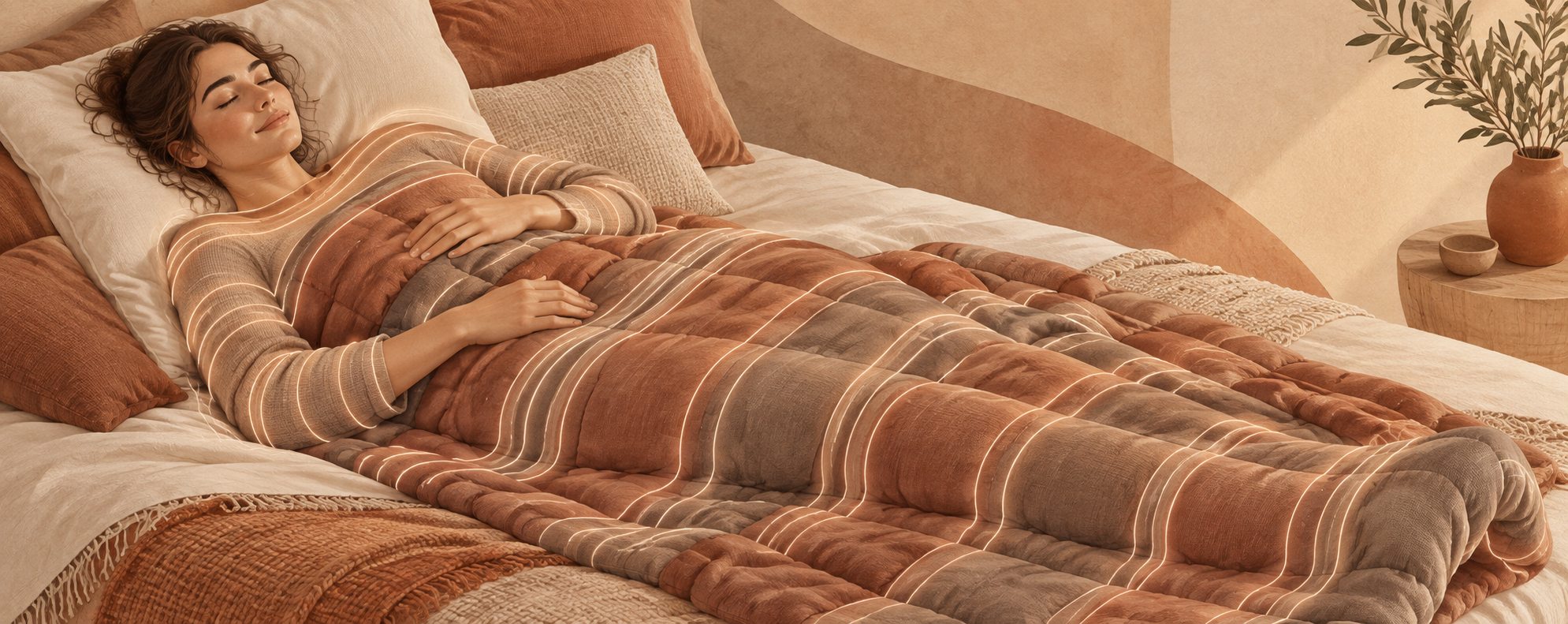
The mechanism behind it is called deep pressure stimulation — firm, evenly distributed pressure across the body, similar to the sensation of a hug or a firm squeeze. Occupational therapists have used deep pressure techniques for decades to help people self-regulate and calm down, originally with patients who had sensory-processing needs. Researchers believe deep pressure works partly through the nervous system, shifting the body slightly away from a "fight or flight" state and toward a calmer, more parasympathetic one, and partly through the simple psychological comfort of a hug-like sensation.
That combination — physiological and psychological — is often exactly how people describe the experience in practice. One YNM customer put it simply: it feels like a steady, gentle hug, and while anxious thoughts still show up, they don't spiral out of control as easily under the blanket's weight. That's a fitting summary of what the research suggests is actually happening — deep pressure doesn't erase anxious thoughts, but it can take some of the edge off how intensely they're experienced.
Can a Weighted Blanket Help with ADHD?
The research here is a bit different — most ADHD studies focus on sleep rather than anxiety directly, but the two are closely linked, since poor sleep tends to make anxiety, mood, and attention noticeably worse. A study published in the Journal of Sleep Research found that weighted blankets improved both sleep duration and quality in children with ADHD, with the biggest gains — about 16 extra minutes of sleep on average — seen in children aged 11 to 14 with the inattentive subtype. A separate qualitative study interviewing 24 parents after a 16-week weighted blanket intervention found that children experienced better sleep onset and continuity, along with what parents described as improved relaxation and reduced anxiety during the day.
The strongest kid-specific evidence for weighted blanket ADHD use is really centered on sleep rather than daytime symptoms. It's worth being precise about what this evidence does and doesn't show: weighted blankets aren't positioned as a treatment for core ADHD symptoms like inattention or impulsivity. What the research does support is a plausible, low-risk role in improving sleep for kids with ADHD, which in turn tends to support better daytime mood and emotional regulation.
Is a Weighted Anxiety Blanket Right for You?
A weighted blanket is worth trying if you're looking for a non-drug way to wind down, you find comfort in pressure or being held, or you deal with restlessness at bedtime that makes it hard to settle in. It's a reasonable complement to therapy or other anxiety treatment, not a substitute for either one — and if your anxiety is significantly affecting your daily life, that's worth bringing to a doctor or therapist regardless of what else you try.
For getting started, YNM's Weighted Blanket Line covers the full range of weights, so you can match one to roughly 10% of your body weight — the standard starting point most of the research above used as well. If you tend to run warm or get anxious about overheating at night, the Cooling Line offers the same deep-pressure effect in a more breathable fabric. For a child with ADHD or sensory needs, the Kids Line is sized and weighted specifically for younger sleepers.
FAQ
Is there real scientific evidence that a weighted blanket for anxiety actually works?Yes, particularly for people with diagnosed anxiety or other psychiatric conditions — multiple studies and at least one meta-analysis show a small but statistically significant reduction in anxiety symptoms. Evidence is less robust for people without a diagnosed condition, though many people still report a calming effect.
Can a weighted blanket replace anxiety medication or therapy?No. It's best thought of as a complementary, non-drug tool, not a replacement for professional treatment. If anxiety is significantly affecting your daily life, it's worth talking to a doctor or therapist.
Do weighted blankets help kids with ADHD?Research mainly supports improved sleep duration and quality in children with ADHD, particularly those with inattentive-type symptoms. Some parent-reported data also points to better daytime relaxation, though weighted blankets aren't shown to treat core ADHD symptoms directly.
How does a weighted blanket physically calm anxiety?Through deep pressure stimulation — firm, even pressure that mimics the sensation of a hug and is thought to nudge the nervous system toward a calmer state, similar to techniques occupational therapists have used for years.
What weight should I choose if I'm using it for anxiety?The same general guideline applies as for any weighted blanket: roughly 10% of your body weight, which is the standard most of the anxiety research above also used.