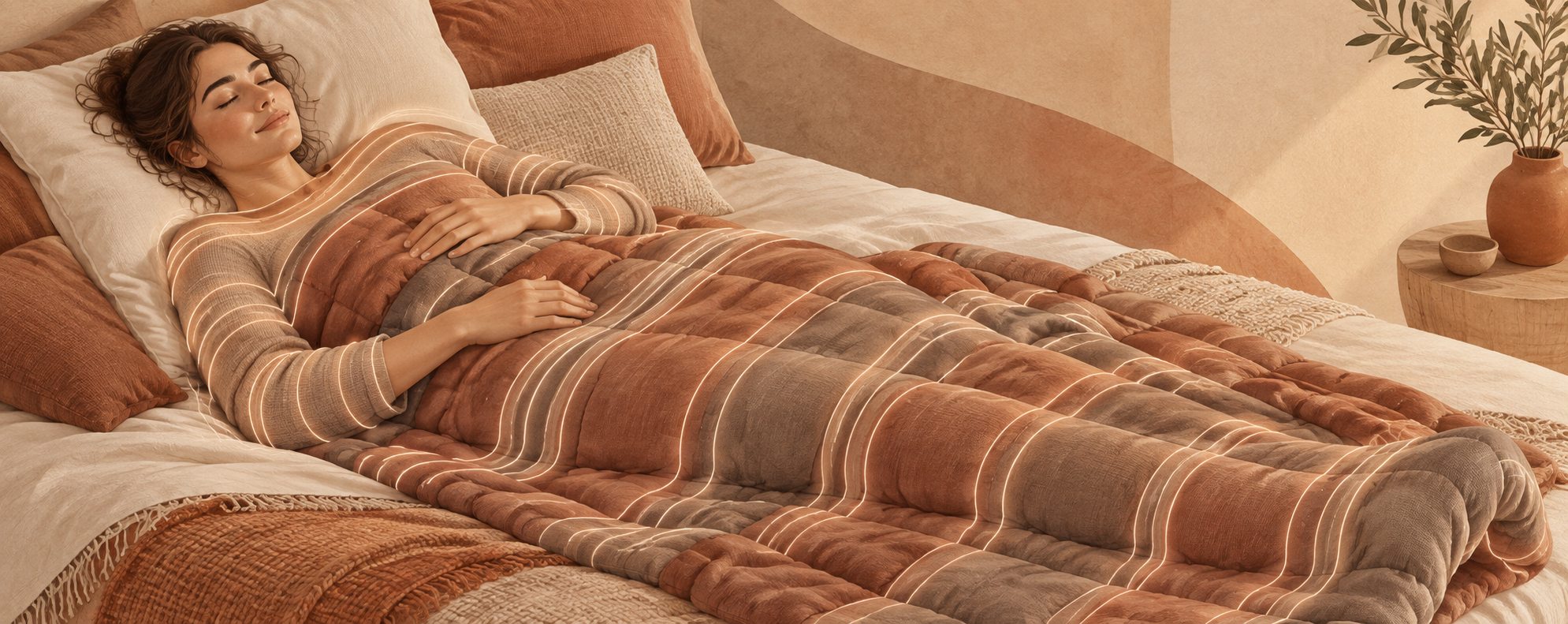
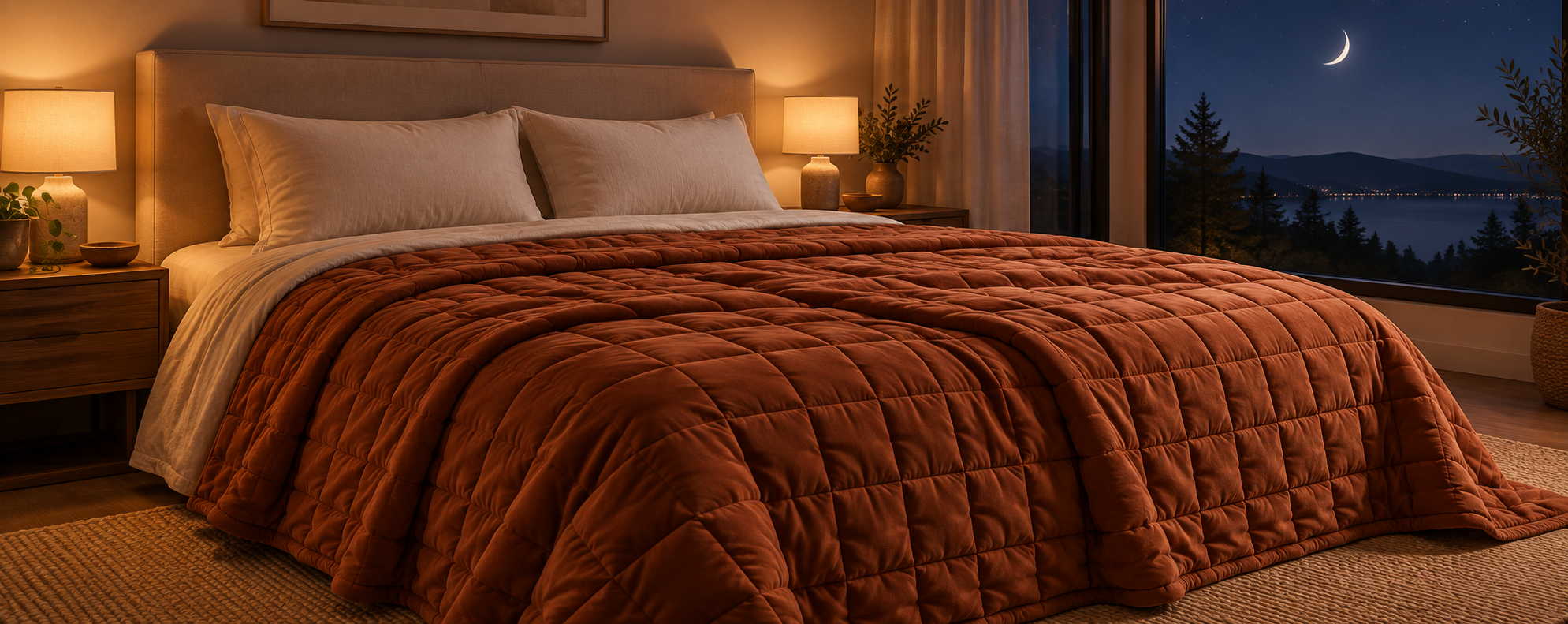
The short answer for most couples: a King-size weighted blanket for couples is the right starting point if you sleep similarly and want one shared layer, but it's not automatically the right call for everyone — how you actually move at night matters more than how romantic sharing one blanket sounds on paper. For young working couples especially, juggling demanding jobs, smaller apartments, and not a lot of spare time to fuss with bedding, getting this decision right the first time is worth the extra five minutes of thought.
Do You Actually Need a Shared Weighted Blanket?
A lot of young couples reach for a weighted blanket couples setup specifically because of stress from work — it's one of the more common reasons people buy their first weighted blanket together. The deep, even pressure is associated with a calmer nervous system, which is part of why so many remote and hybrid workers specifically look for something to help them decompress after a day of back-to-back calls. That said, a weighted blanket is a comfort tool, not a treatment for work stress or anxiety — if either of you is dealing with something more persistent, it's worth pairing it with an actual conversation with a doctor or therapist rather than expecting the blanket to carry that weight alone (pun intended).
Budget and space are worth being honest about too. A shared King blanket is usually the more affordable and space-efficient option compared to two separate blankets, which matters if you're early in your careers or working with a smaller apartment. But cheaper and more compact only helps if it actually works for both of you — which is where sizing and construction come in.
What Size Weighted Blanket Works for Couples?
For two people sharing one blanket, King is the size that actually delivers full coverage — a king size weighted blanket for couples measures around 80" x 87" on YNM's King collection, wide enough that neither partner ends up tugging it toward their side. A Full/Queen can look like it should be enough on a queen bed, but it's cut narrower and tends to leave one person under-covered once two bodies are moving under it.
If you and your partner have very different body weights or sleep styles, it's worth reading that as useful information rather than an obstacle — it usually means the right setup is two separate blankets rather than one compromise size, which we'll get into below.
The Real Problem Couples Run Into (and How to Avoid It)
Here's something that doesn't show up until you're actually using a shared weighted blanket: construction matters as much as size. One YNM customer ran into exactly this — she and her partner are both busy remote workers, and she specifically wanted a shared weighted blanket to help with nightly work anxiety. The problem showed up once they started using it: her partner tosses and turns, and every time he rolled over, the glass beads inside the blanket slid toward her side, leaving him feeling restricted instead of relaxed. They ended up debating whether to return the King blanket entirely and split it into two separate singles.
This is a construction issue, not a "weighted blankets don't work for couples" issue. A bead-filled blanket should be quilted into small, evenly spaced pockets specifically so the fill can't migrate across the blanket when one partner moves — that's the difference between a well-built option and one where a single big internal compartment lets beads pool wherever gravity and movement take them. If you're shopping for a shared blanket, check that it's described as individually stitched or pocketed, not just "filled." YNM's Original weighted blanket line uses small sewn compartments for exactly this reason. If you'd rather sidestep loose fill altogether, a knitted weighted blanket carries its weight in the yarn itself, so there's nothing inside that can shift or pool no matter how much either of you moves overnight.

How to Choose the Right Weight Together
The formula for couples is different from choosing for one person: base the weight on the lighter partner's body weight rather than averaging the two of you, or taking the heavier partner's number.
|
Lighter partner's weight |
Recommended weight |
|---|---|
|
70–140 lbs |
15 lbs |
|
90–160 lbs |
20 lbs |
|
110–190 lbs |
25 lbs |
|
140–240 lbs |
30 lbs |
Sizing to the heavier partner risks making the pressure feel like too much for the lighter one, which is a common reason a shared blanket ends up feeling more restrictive than calming for one half of the couple.
Blanket or Comforter for Couples?
A King weighted blanket is the more flexible option if you want to layer it over bedding you already own, or if you like the idea of swapping it out seasonally. If you'd rather have the weighted layer built into the bed itself, YNM's Weighted Comforter comes in a King size too and combines the pressure with actual warmth, so you're not managing a separate top layer at all — we cover the fuller comparison in our blanket-vs-comforter guide.
When Two Separate Blankets Is Actually the Smarter Choice
If you've already tried a shared King and run into the same bead-migration or restriction issue described above, that's a legitimate signal, not a sign you're doing it wrong. Two separate blankets, each weighted to the person using it, tend to work better when: one partner moves around a lot more than the other, there's a large body-weight difference between you, or your temperature preferences don't match (one of you could use YNM's Cooling Line while the other sticks with a standard weight). None of that is a failure of the "sharing a bed" plan — it's just picking the setup that actually gets you both more sleep instead of the one that photographs better.
FAQ
What is the best weighted blanket for couples?For most couples, a King-size weighted blanket with individually stitched pockets (so the fill can't migrate) is the safest bet, sized to the lighter partner's body weight rather than the heavier one.
Is a king size weighted blanket enough for two people?Yes, King is specifically the size built for sharing — a Full/Queen tends to run too narrow once two people are moving under it.
Why does the weight feel uneven when we share a blanket?This usually means the blanket's fill isn't well-compartmentalized, so beads shift toward whoever's side has less movement. Look for individually stitched pockets, or consider a knitted weighted blanket, which carries its weight in the yarn instead of loose fill.
Should couples always share one weighted blanket?Not necessarily. If your movement, weight, or temperature preferences are very different, two separate blankets usually work better than compromising on one shared setup.
What weight should a couple choose?Base it on the lighter partner's body weight, not an average of both — a common approach is roughly 15–30 lbs depending on that lighter partner's weight range.