Pick up a chenille blanket and the first thing you notice is how it feels: thick, soft, a little fuzzy, almost like running your hand over a plush animal. The second thing you notice, usually after a few weeks, is that it behaves differently from a fleece or a cotton throw. It snags more easily and it likes to be washed gently. Both come down to how chenille is made. This guide starts there, then covers feel, warmth, fibers, washing, and how to choose one.
What Is a Chenille Blanket?
A chenille blanket is a blanket made from chenille yarn, and chenille yarn is built differently from ordinary yarn. Short fibers are placed between two thin "core" yarns, and the cores are twisted together so the fibers stick out on all sides. Heat is then used to set those fibers in place and keep them fluffy.
That's where the name comes from. Chenille is the French word for caterpillar, and a length of the yarn does look like a fuzzy little caterpillar. The first chenille fabric is credited to Alexander Buchanan in 1830s Scotland, who wove tufts of colored wool into blankets and then cut the fabric into strips to make the yarn.
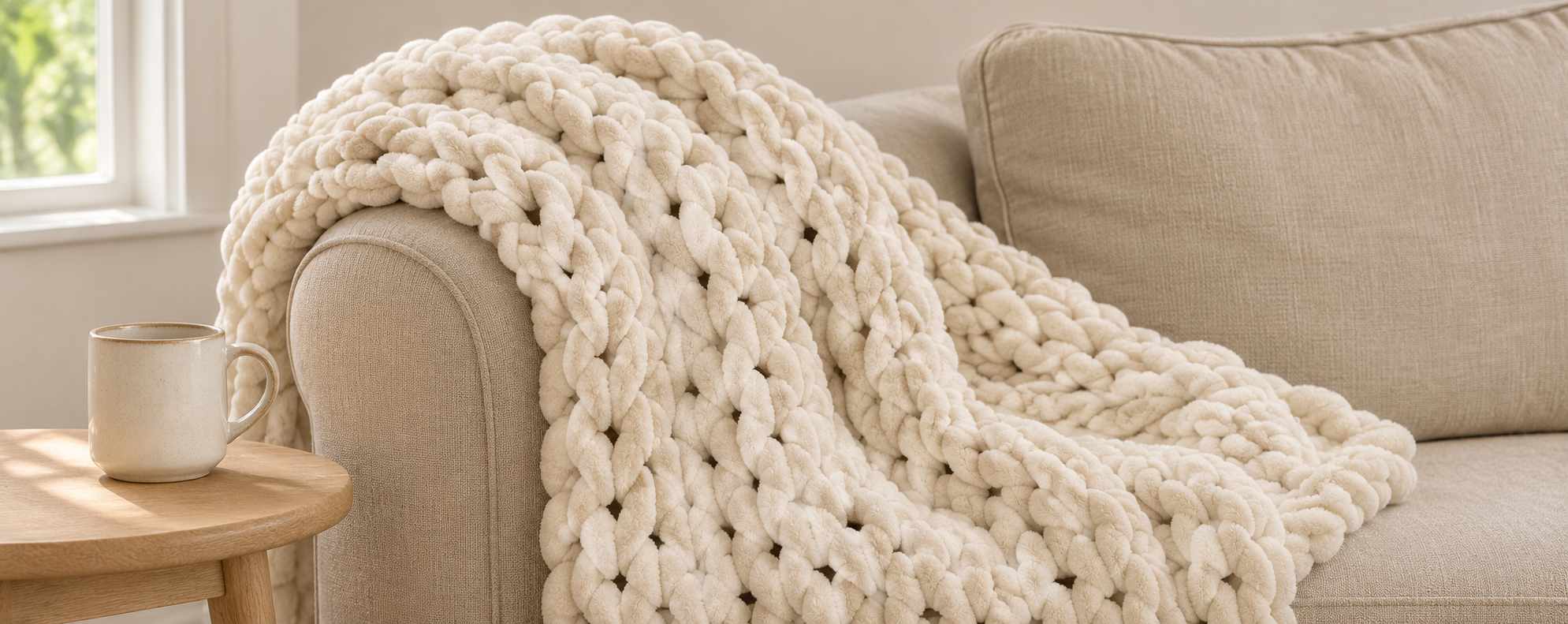
Because the tiny fibers face every direction, they catch light from many angles. That's why chenille often looks slightly shimmery and rich, and why it drapes so softly over a sofa arm.
What Does a Chenille Blanket Feel Like?

A chenille blanket feels plush and cushioned, with a velvety, fuzzy surface. Think of the difference between a smooth sheet and a thick towel. Chenille is closer to the towel: you feel the pile, and it gives slightly when you press it.
Customers describe it the same way. One YNM customer said the chenille throw has a plush, squishy texture, and that it stayed cozy after washing. Another loved the textured look and said the blanket is warm but not overly heavy, perfect draped over the sofa.
Not everyone wants that. If you like fabrics that feel sleek and slippery, chenille can feel too fluffy. If you like something tactile to sink into while you read or watch TV, it's hard to beat.
Is a Chenille Blanket Warm?
Yes, a chenille blanket is warm, though in a medium, cozy way rather than an extreme one. The dense pile traps a thin layer of air close to you, which is the same principle behind most warm fabrics. How warm a particular blanket feels depends on its thickness and fiber.
YNM describes its chenille throw as suitable for all climates, which matches what customers report: warm without feeling heavy. Because it isn't extremely thick, a chenille throw blanket works well on a sofa on a cool evening and is less likely to feel stifling than a bulkier blanket.
Here's how chenille compares with two other soft throw fabrics.
| Chenille | Fleece | Sherpa | |
|---|---|---|---|
| Feel | Plush, fuzzy, squishy | Soft, smooth, light | Thick, fluffy, cozy |
| Warmth | Medium to warm | Moderate | Very warm |
| Drape | Soft and flowing | Light | Fuller, bulkier |
| Good for | Sofa throws, everyday use | Light layering | Cold rooms, extra warmth |
Our sherpa vs fleece vs minky guide goes deeper on the last two.
What Is a Chenille Throw Made Of?
Chenille describes how the yarn is built, not what it's made of, so the fiber in a particular blanket can vary a lot. Early chenille used wool and silk, while today the most common fibers are cotton, polyester, rayon (viscose), and wool, and each changes how the blanket behaves.
| Fiber | What to expect |
|---|---|
| Cotton | Breathable and a good all-rounder |
| Polyester | Usually more affordable, but generally less durable |
| Rayon (viscose) | Silky, with a smoother, drapier feel |
| Wool | The warmest option, but typically pricier |
This matters for care too, since a cotton blend and a polyester blend may not like the same wash settings. YNM's chenille throw page describes the material as heavyweight, fluffy chenille yarn but doesn't list the exact fiber blend, so rely on the label that comes with your blanket. If you're shopping for any chenille, an OEKO-TEX certification is a useful sign that the textile was tested for harmful substances.
Why Does a Chenille Blanket Shed or Snag?
Because of how the yarn is built. The fluffy pile isn't spun into the yarn the way ordinary fibers are; it's held between the two core yarns. That gives chenille its softness, but it also means loose fibers can work free and the open pile can catch on rough surfaces. Textile researchers have studied how core yarn properties affect pile loss in chenille, so it's a recognized trait of the fabric rather than one brand's problem.
In practice you'll mostly notice it in two ways. A little loose fiber may come off, especially early on, and a loop can catch on a ring, a zipper, a rough edge, or a pet's claws.
A few habits help (the washing routine below covers the rest):
- Keep it away from zippers, Velcro, and sharp jewelry.
- If a loop snags, trim it with scissors rather than pulling it.
- Let a pet that kneads or scratches have a smoother blanket of its own.
Our customer's experience fits this: they washed their throw on the delicate cycle and saw barely any shedding.
How Do You Wash a Chenille Throw?
To wash a chenille throw safely, start with the care label, because advice for chenille really does vary. Some guides recommend a cool, gentle machine wash in a mesh bag, while others warn that the pile and its heat-set finish can come undone in a washing machine and suggest hand washing or professional cleaning, especially for large items. Both can be right, because it depends on the fiber and how the blanket was made.
If your label allows machine washing, the cautious routine is:
- Shake out loose dirt first.
- Put the blanket in a mesh laundry bag.
- Wash on a gentle or delicate cycle with cold water and a small amount of mild liquid detergent.
- Skip powdered detergent, which may not fully dissolve, and avoid hot water and vigorous cycles, which can damage fibers and cause shrinkage.
To dry it, lay it flat on a clean towel away from direct heat or strong sunlight, and avoid wringing or twisting. If you use a dryer, choose low heat. When in doubt, hand wash in cold water, and don't dry-clean unless the label says so.
Washing less often is the easiest way to protect chenille. The pile can trap dust and hair, so between washes go over the surface now and then with a soft-bristled brush or a vacuum's upholstery attachment, and shake the blanket out near an open window.
For a small stain, blot with a clean cloth instead of rubbing, which can push the stain in and roughen the pile. A cloth dampened with water and a drop of mild detergent usually handles a light mark. Store the blanket loosely folded or draped, not squashed under heavy items, so the pile stays plush.
Is a Chenille Throw Right for You?
A chenille throw is a good match if you want something soft, textured, and decorative that you'll use daily. It looks great draped over a sofa or the end of a bed, and the plush pile feels good for reading, watching TV, or a nap.
It's less ideal in a few cases. If you run hot, a medium-to-warm throw can still be too much in summer. If a pet kneads or scratches, the loose pile may snag. And if you want the steady, hugging pressure of a weighted blanket, a throw won't give you that, because it's designed for warmth and comfort rather than weight. That's why many people keep both: a chenille throw for the sofa and a weighted blanket for the bed.
What Size Chenille Throw Blanket Should You Choose?
The right size depends on how you'll use it, and most chenille blankets are throws, so check the exact dimensions. A chenille throw blanket for one person on a sofa is usually fine in a mid size, while a bigger one works for sharing or covering a bed. YNM's chenille throw comes in five sizes: 30x40, 40x50, 50x60, 60x80, and 80x87 inches.
- 30x40 and 40x50: small throws for chairs, kids, or the foot of a bed.
- 50x60: a popular lap and sofa size for one person.
- 60x80: more coverage for stretching out or sharing.
- 80x87: large enough to cover most of a bed.
For help matching size to furniture, see our throw blanket size guide. If you're ready to try one, YNM's chenille throw blanket comes in solid colors and checkered patterns, and you can browse more soft options in the throw blanket collection.
FAQ
What is a chenille blanket?
A chenille blanket is made from chenille yarn, which is built by twisting short fibers between two core yarns so they stick out on all sides. The result is a plush, fuzzy blanket, and the name comes from the French word for caterpillar.
Is a chenille blanket warm?
Yes, it's generally medium to warm, depending on thickness and fiber. It's cozy without being as heavy or hot as a very thick sherpa.
Can you machine wash a chenille throw?
Often yes, but check the care label first. If it allows machine washing, use a mesh bag, a gentle cycle, cold water, and mild liquid detergent, then dry flat or on low heat. If the label says hand wash, follow that.
Does a chenille blanket shed?
It can shed a small amount of loose fiber, especially early on, and it can snag on rough surfaces. Gentle washing and handling reduce both.
What size chenille throw is best for a sofa?
A mid size like 50x60 inches suits one person on a sofa, while 60x80 gives more room to share.