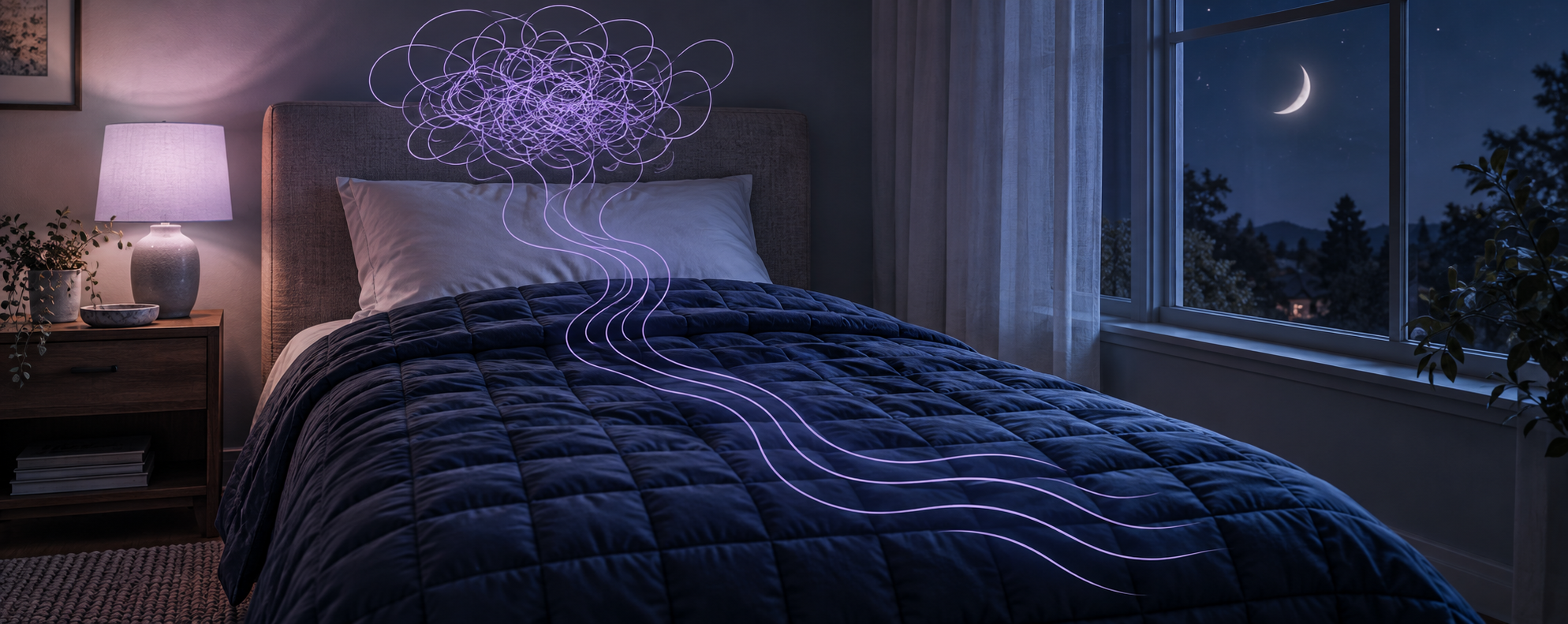
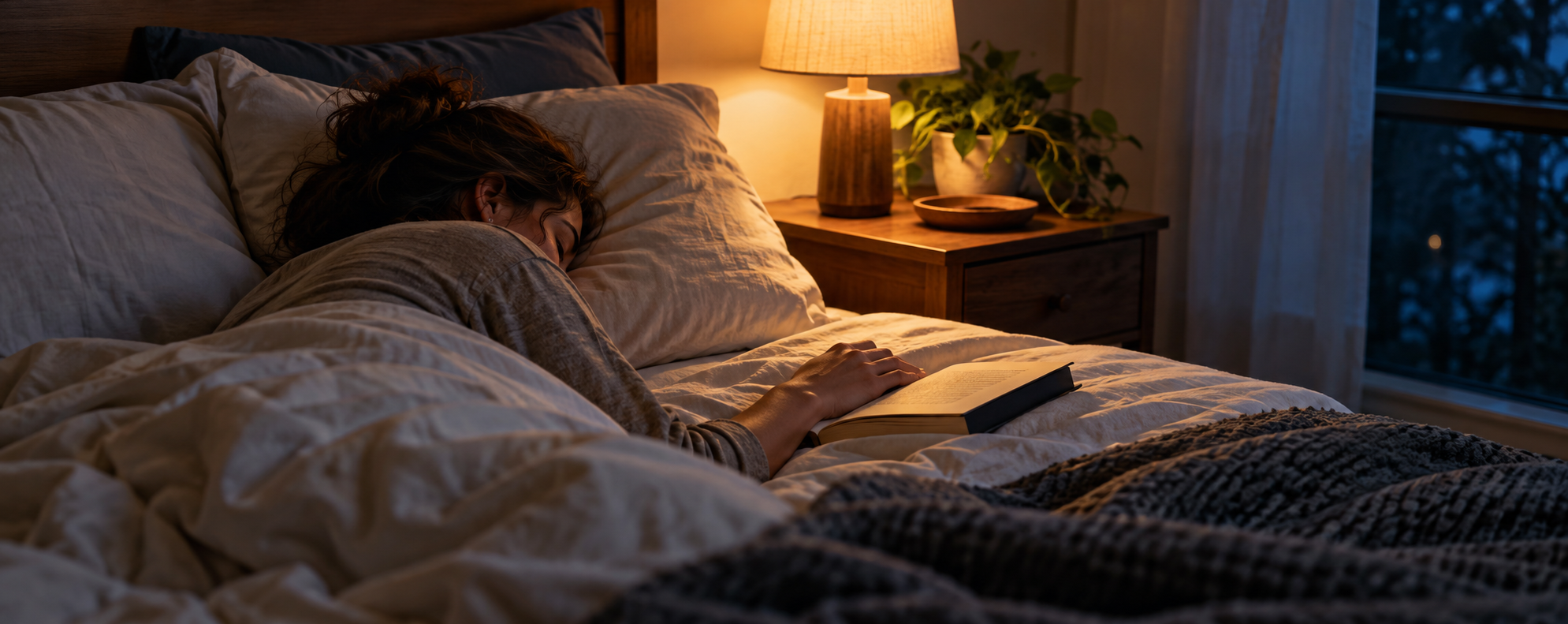
If you've ever asked yourself why does reading make me sleepy even when you weren't tired five minutes earlier, the short answer is that reading is mentally engaging but physically passive — your brain is working, your body is completely still, and that combination is a pretty reliable recipe for drowsiness. Whether that's a welcome bonus or an inconvenient problem depends entirely on when it's happening.
Why Does Reading Make Me Sleepy?
A few things are working together here, and it's rarely just one of them.
Reduced blinking and eye strain. People blink less often while reading than during most other activities, which leads to eye dryness and fatigue — and tired eyes tend to translate into a broader feeling of tiredness.
Low physical stimulation. Reading is about as sedentary as an activity gets. You're usually curled up somewhere comfortable, not moving, with minimal external stimulation — no loud noise, no bright flashing screen, no reason for your body to stay alert. That combination cues your body toward rest mode.
Mental focus without physical output. Your brain is doing real work while reading — visualizing scenes, tracking characters, processing language — but none of that effort shows up as physical activity. It's a bit like running on a treadmill at a slow, steady pace: you're expending real energy, but it doesn't feel like exertion, so the tiredness can sneak up on you.
The relaxation response. Enjoyable reading tends to lower your heart rate and ease your mind into a calmer state, which is very similar to the early stages of winding down for sleep. That's exactly why reading before bed works so well — and exactly why it can backfire if you're trying to stay awake for a study session.
The Science Behind "Reading Drowsiness"
When you're relaxed but still awake — which describes most cozy reading sessions — your brain tends to produce more alpha waves, a pattern associated with a calm, receptive mental state that can gradually shift toward drowsiness. It's worth being precise here: alpha waves are associated with this relaxed state, not proven to single-handedly cause sleep, and individual reading experiences vary quite a bit based on how tired you already are, what you're reading, and how comfortable your setup is.
Is Reading Making You Sleepy a Problem, or Exactly What You Wanted?
The honest answer: it depends entirely on timing. If it's 9 PM and you're winding down with a book, feeling drowsy is the whole point, and there's nothing to fix. If it's the middle of a work report or an exam-prep session, the same drowsiness is a real problem worth addressing directly rather than fighting through with willpower alone.
How to Stay Alert If You Need to Keep Reading
Use bright, even lighting. Dim rooms cue your body toward nighttime mode. Good lighting also reduces the eye strain that contributes to fatigue in the first place.
Sit upright rather than curling up. Posture matters more than people expect — lying down or getting too cozy is basically inviting your brain to treat reading time as rest time.
Take a break every 20–30 minutes. Stand up, stretch, or look at something across the room to rest your eyes before diving back in.
Read actively. Taking notes, highlighting, or summarizing sections out loud keeps your brain more engaged than passive reading does, which helps push back against drowsiness.
Stay hydrated and move a little. A short walk or a glass of water does more for alertness than most people give it credit for.
How to Use Reading to Fall Asleep Faster
If you're on the other side of this — trying to use reading as a wind-down tool rather than fight against it — a few adjustments make it more reliable:
Choose a physical book over a screen. E-readers and phones emit blue light that works against your body's natural wind-down signals, even late at night.
Pick something calm, not a cliffhanger. Slower-paced books or familiar re-reads tend to work better than a thriller that makes you want to read "just one more chapter."
Make it consistent. Reading at roughly the same time each night helps your brain start associating the activity itself with the transition to sleep.
Pair it with something else calming. Reading combines well with other wind-down tools rather than needing to do all the work alone. One YNM customer described this pairing directly: bedtime reading combined with her weighted blanket helps her wind down smoothly and ease into sleep, rather than lying there feeling like she has to force it. A weighted blanket for better sleep works through deep pressure stimulation — we cover the full mechanism in our deep pressure stimulation guide — and pairing it with a reading routine gives your body two calming signals instead of one.

Choosing a Weighted Blanket for Your Reading Routine
If you want to add one to your nightstand routine, the starting point is the same as always: roughly 10% of your body weight plus about a pound, which our full weight guide breaks down in detail. YNM's Weighted Blanket Line covers that range, and the Knitted Line is a nice option if you want something you can also drape over your shoulders while reading upright rather than only using it once you're lying flat.
FAQ
Why does reading make me sleepy even during the day?Reading is mentally engaging but physically passive, which tends to cue your body toward rest — this effect is stronger if you're already a little sleep-deprived or the material is slow-paced.
Is it bad that reading makes me tired?Not at all, if it's happening at bedtime — that's exactly the effect most people want from a wind-down routine. It's only worth addressing if you need to stay alert for work or study.
How do I read without falling asleep?Sit upright instead of lying down, use bright lighting, take breaks every 20–30 minutes, and read actively — taking notes or highlighting — rather than passively.
Does reading before bed actually help you fall asleep?For most people, yes. It shifts your focus away from daily stress, lowers your heart rate, and signals to your brain that it's time to wind down, especially with a physical book rather than a backlit screen.
Can a weighted blanket make bedtime reading more effective?Many people find that pairing reading with a weighted blanket for better sleep gives them two calming signals at once — the mental wind-down from reading and the physical calm from deep pressure stimulation.